How to Choose an Incense Holder: Ceramic, Tray, Burner or Backflow
CULTURE HUB · Ceramic / sculptural incense holder
The right incense holder is both practical and atmospheric. It catches ash, protects the surface, and gives the ritual a visual home.

How to Choose an Incense Holder begins with one practical idea: fragrance should help a room become more intentional, not simply more scented. This guide translates Chinese incense culture into a modern home practice for Western readers, with clear choices, gentle rituals, and Bifang Studio product links.
Start with the incense form
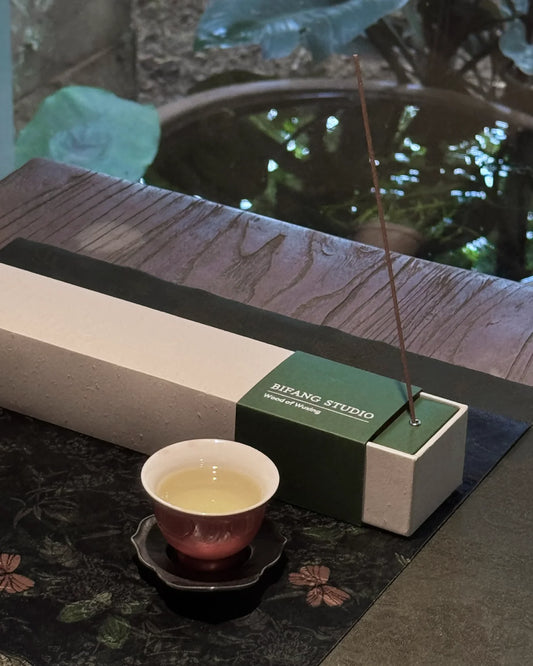
Before choosing an incense holder, ask what kind of incense you use most often. Stick incense(線香) needs a secure hole or groove and enough space for ash. Cone incense(錐形香) or coil incense(盤香) needs a heat-resistant surface. Backflow incense(倒流香) needs a burner designed for smoke to descend through channels.
Many buyers choose by appearance first and function second. That can lead to ash on the table, unstable placement, or a holder that only works with one incense size. Begin with the format, then choose the style.
Bifang Studio offers ritual objects that are meant to feel beautiful in the home while still supporting the practical needs of incense burning.

Choose by function first
| Incense form | Best holder | Look for |
|---|---|---|
| Stick incense | Stick holder or ash-catching tray | A stable hole or groove and enough length to catch ash. |
|
Cone incense/ Coil incense |
Heat-resistant dish or cone burner | A flat, stable surface and easy ash cleaning. |
| Backflow cone | Backflow burner | Channels that allow smoke to descend visually. |
| Decorative daily use | Ceramic holder | A form that looks good even when not burning. |
Why ceramic is a strong choice
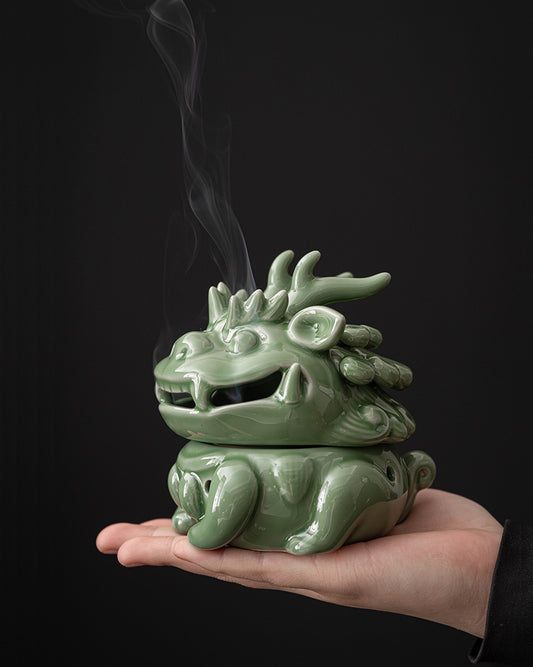
Ceramic incense holders suit modern homes because they feel warm, tactile, and sculptural without being visually heavy. They can sit on a desk, shelf, console, or tea tray as a small object even when incense is not burning.
In Chinese material culture, ceramic vessels often carry meaning through glaze, proportion, and form. A celadon surface, a leaf shape, or a mountain-like silhouette can quietly reference nature and classical objects without turning the home into a theme set.
This is why a ceramic incense holder can work for both daily use and décor. It is functional, but it also holds atmosphere.

How to match holder and room
For a desk, choose a holder that catches ash cleanly and does not take too much space. For an entryway, a more sculptural piece can act as a visual threshold. For tea or meditation, choose something that feels calm from every angle.
A buying checklist
- Confirm which incense form you use: sticks, cones, backflow cones, powder, or resin.
- Check that the holder is stable and heat-resistant.
- Make sure the ash has somewhere to fall safely.
- Choose a form that suits the room even when incense is not burning.
- Clean only after all ash has cooled completely.
FAQ
What is the safest incense holder material?
Ceramic, stone, and metal are common heat-resistant choices. Always place the holder on a stable surface and check that ash is contained.
Do I need a different holder for cones and sticks?
Usually yes. Stick incense and cone incense burn differently and require different support.
What is an ash catcher?
An ash catcher is a tray or surface designed to collect ash as the incense burns, keeping the ritual cleaner.