#ScentScaping : Un guide oriental de l'encens de la Chine ancienne
L'art du Scent-Scaping : sublimer votre espace avec les murmures de l'Antiquité

Dans la quête moderne de l'aménagement du sanctuaire parfait, le design d'intérieur a évolué bien au-delà du visuel et du tactile. Nous sommes arrivés à l'ère de l'architecture invisible. Découvrez le #ScentScaping, la superposition intentionnelle et hautement personnalisée de parfums pour définir l'ambiance, les limites et la résonance émotionnelle d'une pièce. Pourtant, au milieu d'une cacophonie moderne de diffuseurs synthétiques, de vaporisateurs d'ambiance envahissants et de bougies produites en masse, le véritable connaisseur recherche quelque chose de plus profond. Le vrai luxe ne crie pas ; il murmure. Pour faire passer votre design spatial d'un simple parfum agréable à une transformation véritable de votre état d'esprit, il faut se tourner vers une tradition qui a maîtrisé cet art il y a plus d'un millénaire : la présence discrète et apaisante de l'encens chinois ancien.
Chez Bifang Studio, nous pensons que l'expression ultime de l'élégance se trouve dans la simplicité, l'héritage et la pleine conscience. Le Scent-scaping ne consiste pas à masquer un environnement, mais plutôt à révéler son âme. En nous détournant de l'artificiel et en embrassant l'organique, nous invitons un profond sentiment de Zen dans nos routines quotidiennes.
Au-delà du parfum : la philosophie du minimalisme olfactif
L'approche actuelle du parfum d'ambiance est souvent traitée comme un accessoire final et superficiel. Mais et si le parfum était le fondement même de l'énergie de votre maison ? C'est le cœur de la vie minimaliste et orientale. Lorsque nous introduisons de l'encens chinois ancien dans un espace contemporain, nous nous engageons dans une pratique qui transcende la simple esthétique. Nous sculptons l'air. C'est un mouvement minimaliste olfactif où moins est infiniment plus.
Contrairement à la parfumerie occidentale, qui cherchait historiquement à projeter une identité vers l'extérieur, la culture du parfum oriental a toujours été un voyage intérieur. Elle est conçue pour recentrer l'esprit, calmer le système nerveux et créer une atmosphère de profonde quiétude. Dans un monde hyper-connecté et implacablement bruyant, ce retour à la quiétude est le luxe ultime.
La dynastie Song et la Voie de l'Encens

Pour comprendre véritablement la profondeur de cette pratique, nous devons remonter à la dynastie Song (960-1279 après J.-C.), une époque universellement célébrée comme l'apogée de l'élégance subtile et de l'esthétique orientale. Durant cet âge d'or, brûler de l'encens n'était pas seulement fonctionnel ou religieux ; c'était élevé au rang de grand art. C'était codifié comme l'un des « Quatre Arts de l'érudit chinois », aux côtés de la préparation du thé matcha, de l'arrangement des fleurs saisonnières et de l'appréciation des peintures sur rouleau suspendues.
Les lettrés et les philosophes de l'époque ne se contentaient pas de « sentir » le parfum ; ils pratiquaient le Xiangdao, magnifiquement traduit par « écouter l'encens ». Ils croyaient que l'encens chinois ancien possédait le pouvoir unique de purifier l'esprit, de combler le fossé entre le monde matériel et le divin, et d'harmoniser l'énergie, ou Qi, d'une pièce. Profondément enraciné dans la sagesse ancienne du Yi Jing et l'harmonie spatiale du Feng Shui, l'acte d'allumer de l'encens était un rituel de profonde pleine conscience.
Les volutes de fumée éphémères et ascendantes servaient de méditation visuelle. Elles enseignaient à l'observateur la beauté de l'impermanence, la grâce du lâcher-prise et l'équilibre délicat du Yin et du Yang. Allumer un bâton d'encens traditionnel, c'était transformer une pièce banale en un pavillon sacré.
La touche du maître artisan : créer un luxe discret
Les parfums commerciaux d'aujourd'hui sont souvent créés dans des laboratoires stériles, conçus pour un maximum de diffusion et de longévité. L'héritage de l'encens oriental, cependant, est profondément enraciné dans la terre et le passage du temps. La création de l'encens traditionnel est un travail artisanal intensif et minutieux qui ne peut être précipité.

Les maîtres artisans récoltent des plantes purement naturelles : le précieux bois d'agar (souvent appelé le « Bois des Dieux »), le bois de santal vieilli, l'anis étoilé, le clou de girofle et l'encens. Ces éléments sont méticuleusement séchés, réduits en poudres ultrafines et mélangés selon des recettes séculaires et jalousement gardées. Liée uniquement par de la poudre d'écorce d'arbre naturelle et de l'eau purifiée, la mixture est roulée à la main et laissée à sécher lentement au soleil.
Ce processus de luxe lent garantit que chaque bâton d'encens chinois ancien porte l'essence pure et inaltérée de la nature. Lorsqu'il est allumé, il ne libère pas les notes aigres et écœurantes des aldéhydes artificiels. Au lieu de cela, il dégage un bouquet complexe et terreux qui s'installe dans la pièce comme un doux plaid en cachemire — subtil, chaleureux, boisé et profondément réconfortant. C'est un savoir-faire que l'on ressent dans l'air.
Comment parfumer votre sanctuaire moderne
Intégrer cette sagesse ancestrale dans votre routine de #ScentScaping moderne est un exercice d'intentionnalité. Cela vous permet de compartimenter votre journée, signalant à votre cerveau quand il est temps de se concentrer, de se détendre ou de dormir. Voici comment créer l'ambiance invisible de votre maison en utilisant les principes du mode de vie Zen :

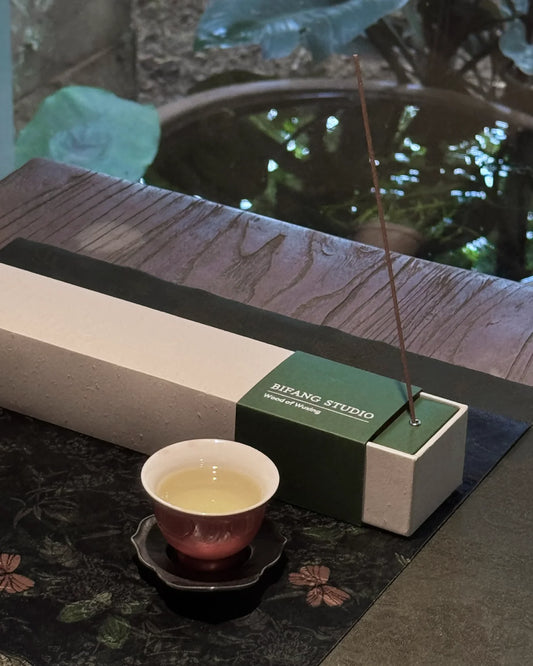
[découvrez notre encens à bâtonnet élément bois pour le rituel du matin]
·L'Éveil Matinal (Le Bureau à Domicile ou le Cabinet de Travail) :
Commencez votre journée en brûlant un mélange léger et stimulant de bois de santal. Selon le Feng Shui, le bois de santal purifie l'énergie stagnante. Laissez les notes nettes, légèrement sucrées et boisées dissiper le brouillard mental, invitant la clarté, la concentration et un sentiment de nouveaux départs alors que vous vous engagez dans votre travail.
·La Transition de l'Après-midi (Le Salon ou le Hall d'Entrée) :
À mesure que la journée avance, l'objectif de votre ambiance parfumée doit passer de la productivité à la présence. Introduisez l'arôme apaisant du cyprès ou de l'aloès boisé mélangé dans vos espaces de transition. Ce parfum agit comme une frontière subtile, dissipant les tensions du monde extérieur et transformant votre espace de vie en un lieu de réceptivité sereine.
·La Retraite du Soir (La Chambre ou la Salle de Bain) :
Pour une détente ultime, utilisez les propriétés profondément calmantes et luxueuses du bois d'agar pur. Son parfum riche, balsamique et légèrement résineux agit comme un sédatif naturel pour l'âme. Allumer du bois d'agar une heure avant le coucher prépare l'esprit à un état de repos profond et réparateur, transformant votre chambre en un véritable sanctuaire de luxe discret.

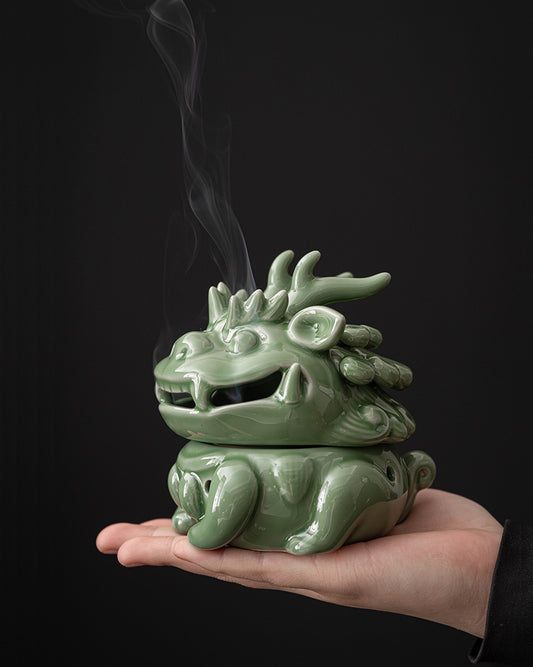
[découvrez notre encens à reflux de bois de santal et notre brûleur de dragon pour le scentscaping de chambre]
Un retour à l'essence
Dans un monde qui sollicite constamment notre attention et épuise notre énergie, cultiver un environnement domestique attentif est la forme ultime de soin de soi. Le Scent-scaping avec de l'encens chinois ancien est bien plus qu'une tendance passagère en matière de design d'intérieur ; c'est un engagement profond envers le bien-être.
C'est une invitation à ralentir, à respirer profondément et à se reconnecter au moment présent. Chez Bifang Studio, nous vous invitons à élever vos rituels quotidiens. En adoptant l'artisanat intemporel et fait main de l'encens oriental, vous ne décorez pas seulement une pièce, vous l'imprégnez de poésie, d'histoire et d'une âme tranquille et durable.
« Prêt à créer votre architecture invisible ? [Explorez la Collection Bifang Studio] – Encens faits à la main pour le connaisseur moderne. »