Ombres et fumée : l'esthétique orientale de l'encens pour une harmonie spatiale

L'architecture d'une grâce invisible
Dans les recoins paisibles d'une pièce élégamment aménagée, le vrai luxe ne s'exprime pas à grands cris. Il se révèle dans l'interaction subtile de la lumière, de l'ombre et de l'architecture invisible des parfums. Lorsque nous considérons les éléments qui complètent un espace de vie, les artefacts tangibles — sculptures, textiles, boiseries — prennent souvent le pas. Pourtant, l'intégration intentionnelle de l'encens dans la décoration intérieure transcende le simple ornement visuel ou olfactif ; c'est une curation d'atmosphère. C'est une pratique orientale ancienne qui tisse de manière harmonieuse le physique et l'éphémère. Allumer un bâton d'encens soigneusement choisi, c'est éveiller l'âme même d'une pièce. C'est une forme d'art profondément enracinée dans la lignée profonde du Xiangdao chinois, la Voie de l'Encens, offrant un sanctuaire de quiétude absolue au milieu de la cadence implacable et cacophonique du monde moderne.
Dans notre philosophie, une maison n'est pas une salle d'exposition d'objets disparates, mais un vaisseau vivant. Le parfum est donc le souffle qui circule dans ce vaisseau. C'est un pont reliant le profane au spirituel. En introduisant de l'encens de qualité supérieure dans votre conception spatiale, vous rejetez la superficialité de la gratification immédiate et adoptez un mode d'existence plus lent et plus délibéré – un style de vie défini par la retenue, l'élégance et une grâce inébranlable.
La philosophie Wuxing : Créer l'équilibre dans l'habitation
Pour vraiment comprendre le placement et le but profond de ces trésors olfactifs au sein d'un intérieur, il faut se tourner vers la philosophie fondamentale du Wuxing — les Cinq Éléments. Cette sagesse chinoise ancienne perçoit l'univers non pas comme une matière statique, mais comme un équilibre dynamique et continu de Bois, Feu, Terre, Métal et Eau. L'intégration de l'encens dans la décoration intérieure ne consiste pas seulement à introduire un arôme agréable pour masquer le quotidien ; c'est un acte profond d'équilibre de ces cinq forces élémentaires pour cultiver un Qi harmonieux, ou énergie vitale, au sein de vos espaces privés.

Bois (Mu) : L'Origine du Souffle
Le voyage esthétique commence par le Bois, l'incarnation physique de l'encens brut lui-même. L'oud de haute qualité (Chenxiang) ou le bois de santal (Zhentan) porte les souvenirs silencieux et séculaires de forêts profondes et intactes. Lorsque l'on choisit de l'encens pour la décoration intérieure, on n'acquiert pas une marchandise jetable. Au lieu de cela, on invite un fragment de la majesté tranquille de la nature à l'intérieur. Le Bois représente la croissance organique, le mouvement ascendant et un profond sentiment d'enracinement. Il ancre l'esthétique de votre espace dans une vérité naturelle indéniable, établissant une base de quiétude avant même que l'allumette ne soit allumée.
Feu (Huo) : L'Alchimie de la Transformation
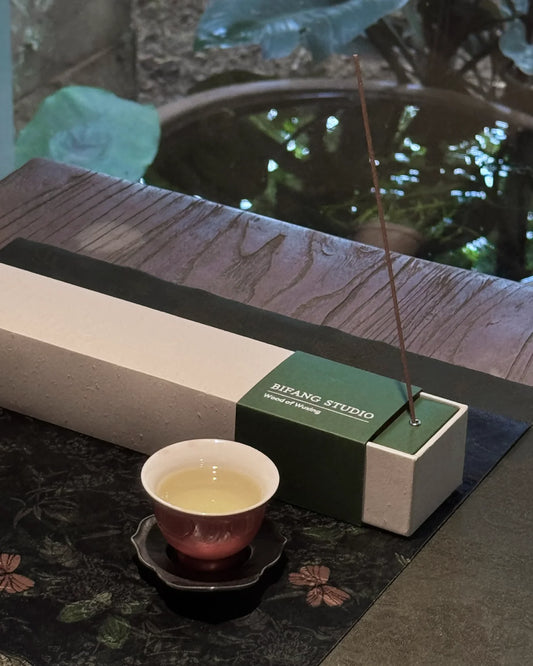
Le Feu est le catalyseur, l'élément transformateur qui relie le royaume mortel au divin. Une seule braise incandescente sur un bâton d'encens est un chef-d'œuvre de retenue visuelle. Ce n'est pas une flamme rugissante et dévorante, mais une chaleur disciplinée et solitaire qui coaxiale doucement l'esprit du bois. Placé dans une alcôve sombre ou sur une console minimaliste, ce minuscule point de lumière sert de point focal pour l'esprit vagabond, transformant la matière brute et terrestre en un parfum éthéré et flottant.
Terre (Tu) : Le Vaisseau de la Sérénité
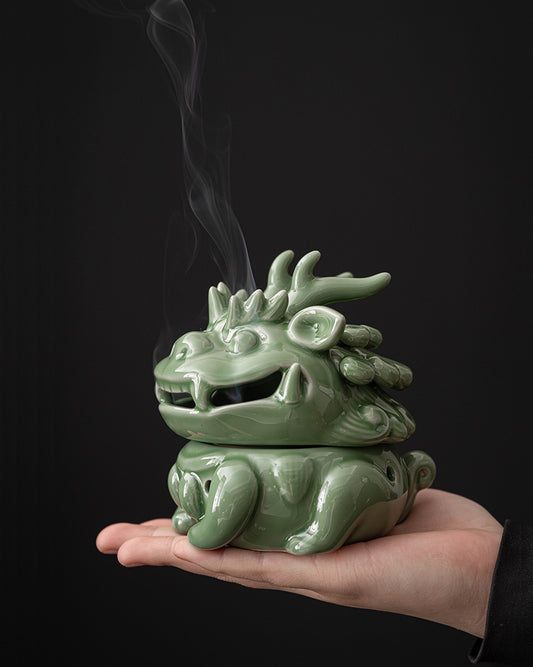
La cendre parfumée qui descend doucement, et l'encensoir qui la recueille patiemment, appartiennent intrinsèquement au royaume de la Terre. Un brûle-encens en céramique ou en porcelaine méticuleusement conçu est l'ancre visuelle de l'encens pour la décoration intérieure. Il offre un contrepoint tactile et enraciné à la fumée légère et flottante. Ces récipients, souvent inspirés des tons sourds et monochromes et de l'austérité élégante de la poterie de la dynastie Song, servent d'ancres sculpturales dans une pièce. Ils occupent l'espace avec une dignité tranquille et monumentale longtemps après que le parfum se soit évanoui dans la mémoire.
Métal (Jin) : Le raffinement de l'intention
Le métal évoque la clarté, la précision et les outils raffinés de la cérémonie Xiangdao. Les délicates pinces en laiton, les tampons en cuivre utilisés pour façonner méticuleusement les cendres, et les couvercles en bronze des encensoirs eux-mêmes — ces instruments apportent un sens de l'ordre rituel à la nature éphémère de la fumée. Présentés avec soin à côté d'un encensoir en céramique, ces accents métalliques froids ajoutent une couche de texture sophistiquée à l'environnement domestique. Ils reflètent une attention méticuleuse aux détails qui élève sans effort l'ordinaire au rang de grand art.
Eau (Shui) : La fluidité de la forme
Bien que sec au toucher, l'encens canalise intimement la nature poétique de l'eau à travers le mouvement de sa fumée. Alors que le panache parfumé s'élève dans l'air immobile d'une pièce, il danse avec une grâce nonchalante, imitant les rivières en mouvement et évoquant les pics brumeux et inaccessibles d'une peinture de paysage chinois classique. Ce mouvement fluide et imprévisible adoucit les lignes rigides et géométriques de l'architecture moderne. Il introduit une grâce poétique et aquatique qui purifie l'atmosphère et permet à l'esprit de l'observateur de s'abandonner à une contemplation tranquille, incarnant parfaitement le principe esthétique du "Liu Bai" — l'espace blanc intentionnel dans la peinture au pinceau traditionnelle qui offre à l'imagination du spectateur l'espace pour respirer.
Au-delà de l'Ornement : l'Encens comme Héritage Culturel
Dans la lignée austère de l'esthétique orientale, un brûle-encens n'est jamais relégué au rang de simple récipient. Considérez le légendaire Boshan Lu, l'encensoir de la Montagne Universelle de la dynastie Han, coulé avec une complexité qui évoque les cimes mythiques et brumeuses des immortels. Lorsque la fumée parfumée s'échappait de ses crevasses de bronze, c'était comme si une chaîne de montagnes mystique s'était matérialisée dans les limites du studio de l'érudit. Aujourd'hui, l'intégration de l'encens dans la décoration intérieure est la continuation directe de cette tradition poétique.
Les récipients que nous choisissons et les parfums anciens que nous collectionnons agissent comme des héritages culturels. Ce sont des vecteurs de nourriture spirituelle de haut niveau, méticuleusement conçus pour être collectionnés, vénérés et finalement transmis de génération en génération. Ils défient, silencieusement et résolument, les parfums d'ambiance synthétiques produits en masse. Placer un encensoir magistralement conçu dans votre maison, c'est faire une déclaration de goût définitive – une connexion profonde à l'Antiquité et un témoignage d'un mode de vie profondément élevé et conscient.

La curation de l'espace parfumé
L'arrangement conscient de ces éléments exige une approche délibérée et sans hâte. Pour utiliser efficacement l'encens dans la décoration intérieure, il faut considérer attentivement la chorégraphie de la pièce. Imaginez placer un bol à encens en céladon sur un socle en bois sombre et non poli près d'une fenêtre légèrement entrouverte, permettant aux courants d'air naturels et subtils de disperser délicatement l'arôme dans la pièce. Laissez l'encensoir sous une œuvre de calligraphie subtilement éclairée ou une œuvre d'art abstraite, où la fumée tourbillonnante et éphémère peut interagir avec la lumière, créant ainsi une installation vivante et respirante d'ombres et de parfums.
L'acte de s'engager avec l'encens devrait transcender la routine ; il doit devenir un rituel quotidien de retour à soi-même. Il exige une pause du temps, un allumage délibéré de l'allumette et un moment d'observation silencieuse. L'encens n'est pas un accessoire à consommer passivement en arrière-plan, mais une expérience immersive à habiter pleinement par les sens.
Un Retour à la Quiétude Intérieure
En fin de compte, le luxe véritable et durable d'une maison bien aménagée réside dans sa capacité inébranlable à offrir un refuge face au monde extérieur. En adoptant la philosophie ancienne du Wuxing et le profond héritage de la culture de l'encens chinois, nous avons le pouvoir de transformer de simples espaces de vie en de vastes et tranquilles paysages de l'esprit. La présence subtile et persistante d'un encens soigneusement choisi pour la décoration intérieure imprègne un espace d'une élégance intemporelle et distante qui ne peut être reproduite par des moyens purement visuels. Elle initie un dialogue silencieux et continu entre le résident et l'univers — une note persistante de profonde tranquillité qui reste suspendue dans l'air, longtemps après que la fumée physique se soit évanouie dans l'éther. Dans cette quiétude profonde, au milieu des ombres et de la fumée, nous retrouvons enfin notre centre.