La symphonie silencieuse de l'espace : comment utiliser l'encens pour le Feng Shui

Dans la quiétude d'un cabinet d'étude chinois traditionnel, il existe une compréhension profonde qu'une pièce n'est jamais vraiment vide. Elle est habitée par le souffle invisible de l'univers, une énergie vitale connue sous le nom de Qi. Pour maîtriser l'arrangement de cette énergie – l'ancienne pratique du Feng Shui – il faut regarder au-delà du placement des objets physiques. Il faut considérer l'éthéré. Pendant des siècles, les lettrés et les savants de l'Orient ont compris une vérité silencieuse : le parfum est l'architecte ultime de l'espace. Apprendre à utiliser l'encens pour le Feng Shui n'est pas seulement une pratique de parfumerie d'ambiance ; c'est une élévation de l'esprit, une harmonisation de l'environnement, et un dialogue avec l'antiquité.
L'Architecture Invisible du Qi
Dans l'esthétique orientale classique, la forme la plus élevée de beauté est souvent informe. Tout comme les espaces vides intentionnels – le "laisser du blanc" (Liubai) – dans une peinture à l'encre de la dynastie Song, l'atmosphère d'une pièce a autant de poids architectural que le rare mobilier en bois de huanghuali qui s'y trouve. L'encens fait le pont entre le tangible et l'intangible. Lorsqu'un bâton d'aloès ancien est allumé, le délicat fil de fumée s'élève, emportant avec lui une résonance qui interagit avec le champ magnétique de l'espace. Il nettoie l'énergie stagnante et invite un Qi serein et fluide.
Pendant les dynasties Tang et Song, la combustion de l'encens fut élevée au rang des Quatre Arts du Savant Chinois, aux côtés de la préparation du thé, de l'arrangement floral et de la suspension de rouleaux. Les anciens ne "sentaient" pas l'encens ; ils pratiquaient le "Wen Xiang" – l'écoute de l'encens. Cela exige une immobilité de l'esprit, permettant au parfum de parler aux plus profonds couloirs de la mémoire et de l'intuition. Comprendre comment utiliser l'encens pour le Feng Shui, c'est apprendre à écouter les besoins silencieux de votre environnement spatial.
Wuxing : Les Cinq Éléments dans l'Art Olfactif
Pour vraiment comprendre l'harmonie spatiale, il faut se plonger dans la philosophie du Wuxing – les Cinq Éléments. Le Bois, le Feu, la Terre, le Métal et l'Eau ne sont pas des matériaux statiques, mais des phases dynamiques d'énergie qui régissent l'univers. Chaque élément correspond à une direction spécifique, une saison et un état d'être. En organisant votre collection d'encens selon ces principes anciens, vous sculptez l'énergie de votre habitation avec une intention délibérée.

Bois (木, Mu) : L'Éveil du Printemps
Associé à l'Est, à l'aube et à l'élan ascendant incessant du bambou printanier, le Bois représente la vitalité, la croissance et la bienveillance. Pour inviter l'élément Bois dans votre espace, recherchez des encens fabriqués à partir de bois d'agar brut et vert, de Hinoki ou de cyprès ancien. Allumer ces bois dans le secteur est de votre maison favorise la croissance personnelle, les nouveaux départs et la vitalité intellectuelle. Le parfum doit être net et verdoyant, portant le souvenir lointain de forêts couvertes de mousse et trempées par la pluie. C'est une énergie qui tire doucement l'esprit vers le haut.
Feu (火, Huo) : L'Illumination du Cœur
Résidant au Sud, le Feu est l'élément de l'illumination, de la chaleur et du soleil de midi. Il régit l'inspiration, la passion et la manière dont notre essence est perçue dans le monde. Cependant, dans la pratique raffinée du Xiangdao, le Feu n'est jamais une force flamboyante et destructrice ; c'est la chaleur contenue des braises incandescentes sous les cendres hivernales. Les encens aux épices chaudes subtiles, telles que l'anis étoilé raffiné, le clou de girofle délicat, ou certains types d'encens, stimulent cette énergie. L'utilisation de tels encens dans le secteur sud éveille doucement les sens et cultive une atmosphère de confiance tranquille et de présence rayonnante.
Terre (土, Tu) : L'Étreinte Ancrante
Au centre du Bagua, la Terre est l'ancre. Elle représente la stabilité, l'immobilité, la subsistance et le calme profond d'un après-midi d'automne. Le bois de santal vieilli est le parfum par excellence de la Terre. Son arôme crémeux, profondément ancrant, possède une capacité inégalée à centrer un esprit agité. Lorsque vous vous sentez déraciné par le rythme incessant de l'existence moderne, brûler du bois de santal fin et vieilli au centre physique de votre maison stabilise le Qi, créant un sanctuaire de paix inébranlable. Il sent le vieux papier, les bibliothèques anciennes et l'endurance intemporelle.
Or/Métal (金, Jin) : La Clarté de l'Automne
Gouvernant l'Ouest, le soleil couchant et la netteté de l'automne, l'énergie du Métal est celle de la distillation, de la pureté et du lâcher-prise de l'inutile. C'est le son d'une cloche en bronze dans un temple de montagne silencieux — clair, perçant, mais transitoire. Pour canaliser cet élément, recherchez des résines fraîches, des notes camphrées ou des mélanges floraux subtils et secs. Allumer un tel encens dans le coin ouest d'une pièce dissipe le brouillard mental, aiguise la concentration et purifie l'atmosphère, tout comme l'air pur qui suit la première gelée de la saison.
Eau (水, Shui) : Le Flux de la Sagesse
Circulant au Nord, l'Eau est l'élément de l'hiver, de minuit et de la sagesse profonde et introspective. Elle est informe, adaptable, mais immensément puissante. L'expression ultime de l'Eau dans l'art olfactif est le Kyara (Qinan), le grade le plus rare et le plus vénéré de bois d'agar qui coule. Son parfum complexe, rafraîchissant et profondément pénétrant atteint les profondeurs mêmes de l'âme. Brûler du bois d'aloès sombre et dense en résine dans le secteur nord favorise une méditation profonde, aiguise l'intuition et cultive une énergie fluide et adaptable qui reflète un bassin tranquille reflétant la lune.
Le Rituel : La Voie de l'Encens (Xiangdao)
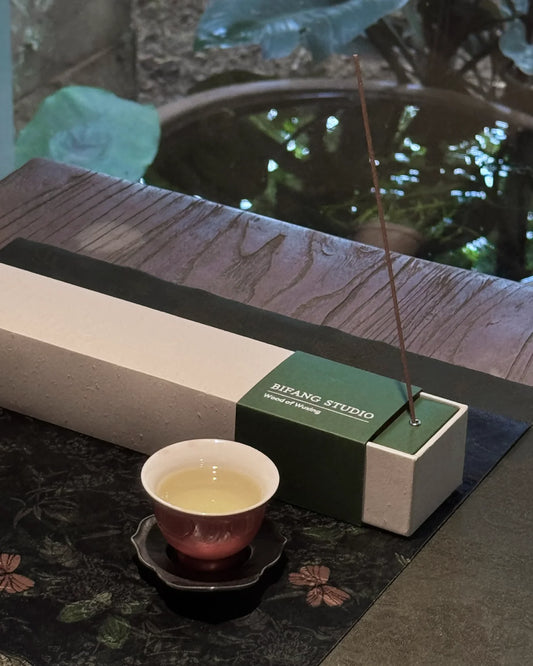
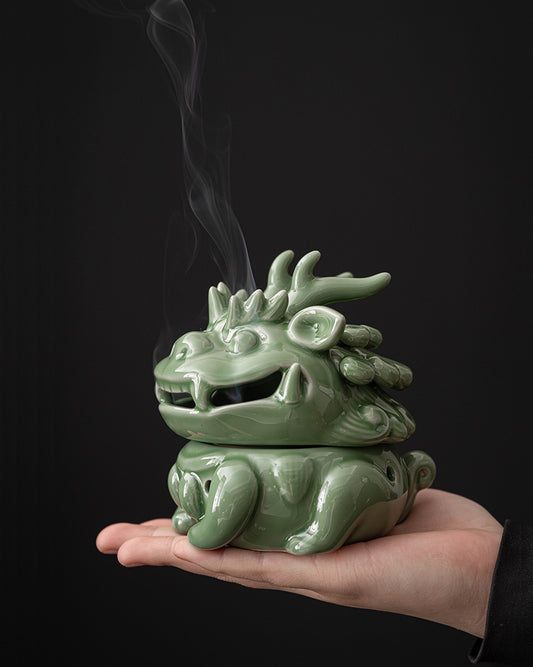
L'application de l'encens en Feng Shui est un exercice de pleine conscience. Elle exige une approche délibérée et sans hâte. Le rituel commence bien avant que la flamme ne touche l'encens. Il commence par le choix du récipient – peut-être un encensoir en bronze soigneusement coulé, un brûleur en céladon avec le glaçure d'un ciel brumeux, ou une antiquité collectionnée qui porte sa propre gravité et son lignage. Les outils que vous utilisez deviennent des extensions de votre intention.
Lorsque l'on considère comment utiliser l'encens pour le Feng Shui, le moment est tout aussi crucial. Les heures du matin, lorsque l'énergie Yang monte, sont idéales pour les parfums plus légers, orientés vers le Bois, afin d'éveiller l'espace et d'inviter la clarté. Le soir, dominé par l'énergie Yin, appelle les notes profondes et ancrantes de la Terre ou de l'Eau pour ramener l'esprit vers l'intérieur et préparer au repos. Tandis que la fumée s'enroule et se dissipe, observez sa danse silencieuse. Elle révèle les courants invisibles de l'air et de l'énergie dans la pièce, cartographiant le flux du Qi sous vos yeux. Cette observation est une méditation en soi.

Au-delà du parfum : la lignée du sublime
Il est essentiel de reconnaître que le véritable encens oriental est totalement différent des parfums synthétiques et des vaporisateurs d'ambiance agressifs du marché de masse. Un bâtonnet d'encens méticuleusement fabriqué, ou un morceau de bois brut et vieilli, est une œuvre d'art – le couronnement de la patience infinie de la nature et du raffinement humain. Les ingrédients – des bois enfouis dans la terre humide pendant des siècles, des résines cristallisées par le lent passage du temps – sont des denrées précieuses. Ils possèdent une valeur intrinsèque et collectionnable qui transcende leur fumée transitoire.
Ces matériaux sont des vaisseaux spirituels. Ils sont collectés et préservés par des connaisseurs non seulement pour leur profil aromatique, mais aussi pour leur lignée, leur rareté et la dignité tranquille qu'ils confèrent à un espace. Lorsque vous brûlez un tel encens, vous libérez des siècles d'énergie accumulée dans votre moment présent.
Maîtriser l'utilisation de l'encens en harmonie spatiale, c'est embrasser l'art de l'élégance invisible. C'est un dialogue silencieux avec l'univers, mené dans le langage du parfum. En honorant la philosophie Wuxing et en sélectionnant vos fragrances avec retenue et révérence, vous transformez votre maison d'une simple structure physique en un sanctuaire authentique. Le vrai luxe du parfum ne réside pas dans son volume, mais dans sa profonde et silencieuse capacité à élever le quotidien au royaume du sublime.