#Bien-êtreSpatial : Guide oriental de l'encens Feng Shui
L'architecture du Qi : Élever le bien-être spatial grâce à l'art invisible du parfum

Nous passons nos vies à organiser méticuleusement le visible. Nous nous passionnons pour le grain tactile d'une table en bois récupéré, la teinte exacte du chaulage sur les murs et l'interaction de la lumière naturelle sur un canapé en lin. Pourtant, le vrai luxe ne se voit pas seulement ; il se ressent profondément, indéniablement. Dans le mouvement en rapide évolution du #BienEtreSpatial, le design moderne se réveille à une vérité profonde que les philosophes orientaux connaissent depuis des millénaires : nos environnements possèdent un pouls. Les anciens Chinois appelaient cette force de vie invisible le Qi. Pour vraiment maîtriser une pièce, il ne faut pas seulement l'aménager, mais en accorder la fréquence. Au cœur de cette orchestration énergétique se trouve une pratique profondément incomprise : l'utilisation raffinée et intentionnelle de l'encens feng shui.
Au-delà de la superstition : retrouver l'essence du vent et de l'eau
Pendant des décennies, l'interprétation occidentale du Feng Shui a été obscurcie par des caricatures commerciales. Elle a été réduite à des règles rigides de placement de meubles, de statues de crapauds dorés et de bibelots superstitieux censés manifester une richesse soudaine. Mais lorsque nous dépouillons ces commodifications modernes, le Feng Shui se traduit simplement et poétiquement par « Vent et Eau ». C'est l'étude profonde et silencieuse de l'harmonie entre les êtres humains et le monde naturel qu'ils habitent.
Lorsque nous introduisons un encens feng shui de première qualité dans cette philosophie minimaliste, nous ne lançons pas un sort ou ne nous engageons pas dans une superstition bon marché. Au lieu de cela, nous utilisons un mécanisme olfactif ancien pour purifier l'air stagnant, ancrer l'esprit vagabond et élever le sanctuaire du foyer. C'est le bien-être spatial dans sa forme la plus pure et la plus élémentaire. Le parfum devient l'architecture invisible de votre maison, capable de modifier l'ambiance, les limites et la résonance énergétique d'une pièce en quelques instants.
L'esthétique de la dynastie Song : Le parfum comme discipline spirituelle
Pour comprendre véritablement l'importance de cette pratique, nous devons remonter à la dynastie Song (960–1279 après J.-C.). Largement considérée comme l'apogée de l'esthétique orientale, l'ère Song fut définie par un minimalisme époustouflant, une contemplation tranquille et une révérence absolue pour la nature. Les lettrés et les savants de l'époque n'équivalaient pas le luxe à des démonstrations ostentatoires de richesse. Pour eux, le luxe résidait dans la retenue, la proportion et la maîtrise des sens subtils.
Durant cet âge d'or, brûler de l'encens n'était pas une habitude banale pour masquer les odeurs. C'était élevé au rang de Xiang Dao, ou « La Voie de l'Encens » – l'un des Quatre Arts du Savant Chinois, aux côtés de la préparation du thé, de la calligraphie et de l'arrangement floral. Les érudits Song comprenaient que le parfum possédait une qualité structurelle. Là où la pierre et le bois régissent le périmètre physique d'une cour, le parfum dicte le périmètre émotionnel et spirituel.
Un encens feng shui soigneusement élaboré était utilisé pour manipuler activement le Yin et le Yang d'un espace. Une pièce humide et lourde souffrant d'un excès de Yin était revigorée par les notes chaudes et ensoleillées du bois de santal. Inversement, un esprit agité et surchauffé, accablé par un excès de Yang, était rafraîchi et ancré par la résonance profonde et terreuse de l'agarwood vieilli. La fumée elle-même, s'élevant élégamment dans l'air immobile, était considérée comme un pont physique entre le royaume terrestre et l'éther divin – une représentation visuelle du souffle, du calme et de l'intention.
L'alchimie de l'air : équilibrer les cinq éléments
Aujourd'hui, alors que le concept de #BienEtreSpatial est tendance dans les sphères du design mondial, il fait essentiellement écho à cette sagesse séculaire. Le véritable bien-être spatial n'est atteint que lorsque les Cinq Éléments — Bois, Feu, Terre, Métal et Eau — sont en équilibre. L'encens, par sa nature même, est une leçon magistrale de cette alchimie élémentaire.
Considérez le cycle de vie d'un bâton d'encens de haute qualité : il commence comme la Terre (matières botaniques récoltées, écorces et résines naturelles), est transformé par l'étincelle du Feu, se manifeste comme une fumée parfumée qui voyage dans l'Air (Vent), et laisse finalement derrière elle une cendre délicate qui retourne à la Terre. C'est un cycle complet de transformation.
Lorsque vous allumez un encens feng shui pur, d'origine botanique, vous initiez un micro-rituel d'équilibre énergétique. Les molécules de parfum organique se lient à l'air stagnant et lourd de votre maison — ce que les praticiens anciens appelaient le Sha Qi (énergie morte) — et le dispersent doucement. À sa place, l'encens invite le Sheng Qi (énergie vibrante et vivante). Cette pratique ne consiste pas seulement à faire en sorte qu'une pièce sente bon ; c'est une remise à zéro énergétique, qui élimine les résidus psychiques des journées de travail stressantes, du chaos extérieur et de la fatigue émotionnelle.
Cultiver le luxe discret : Un rituel pour la maison moderne
Intégrer cette ancienne pratique de bien-être spatial dans un mode de vie moderne exige de l'intention. La première étape est de laisser de côté les bâtonnets fortement parfumés et synthétiques qui surchargent les sens et polluent l'air. Le luxe discret exige la pureté. Recherchez des ingrédients naturels — bois d'aloès, encens, cèdre et épices subtiles — qui murmurent plutôt que de crier. Une fois que vous avez trouvé votre encens, réfléchissez à la manière de l'appliquer aux différentes zones de votre maison.
Le seuil : Couper le monde extérieur
Utilisez le parfum pour délimiter les transitions. Nous vous recommandons d'allumer votre encens dans le hall ou l'entrée immédiatement en rentrant chez vous. Laissez le doux panache de fumée agir comme un seuil, coupant efficacement l'énergie chaotique et rapide du monde extérieur. En traversant la fragrance subtile, cela signale à votre système nerveux que vous êtes entré dans un sanctuaire de paix.
Le cœur du foyer : centrer l'espace
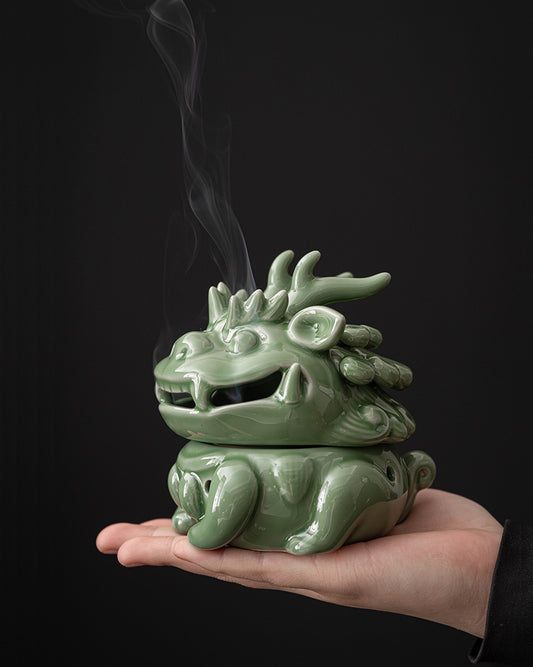
Dans le Feng Shui classique, le centre absolu d'une maison est connu sous le nom de Tai Qi, le cœur énergétique d'où toute vie s'écoule et rayonne. Placer un brûleur d'encens en céramique, minimaliste et magnifiquement conçu, à cet endroit central permet aux propriétés équilibrantes de la fumée de pénétrer doucement dans chaque pièce environnante. Au fur et à mesure que le parfum se diffuse, visualisez l'architecture de votre espace s'adoucissant, s'étendant et exhalant.
Le lieu de repos : cultiver l'énergie Yin
La chambre à coucher doit être un temple de l'énergie Yin – sombre, calme, fraîche et réparatrice. Évitez ici les parfums floraux ou d'agrumes trop stimulants. Au lieu de cela, brûlez un encens feng shui ancrant, à base de bois profonds ou de résines subtiles, environ une heure avant le sommeil. Laissez le parfum dissiper les pensées persistantes de la journée, créant un cocon invisible qui prépare l'esprit à un repos profond.
Le luxe ultime est la quiétude
Nous vivons dans une ère définie par un bruit incessant — numérique, visuel et auditif. Dans un tel monde, le vrai luxe est la culture délibérée du silence. C'est l'aménagement d'un environnement qui vous soutient, vous ancre et restaure votre esprit sans exiger votre attention. En renouant avec la sagesse ancienne et sophistiquée du Xiang Dao, nous élevons nos maisons de simples structures physiques de cloisons sèches et de verre en environnements vivants et respirants.
Le bien-être spatial n'est pas une tendance éphémère en design d'intérieur ; c'est un retour vital à nos racines. C'est la prise de conscience tranquille que l'air dans lequel nous nous mouvons est tout aussi important que le sol sur lequel nous nous tenons. Au Bifang Studio, nous vous invitons à vous éloigner du bruit, à allumer l'allumette, à observer la fumée s'élever avec grâce, et enfin, à respirer. Bienvenue dans l'art invisible de bien vivre.