Chinese Incense Types for Digital Detox: The Architecture of Ash Ritual
The Tyranny of the Screen and the Sanctuary of the Ember

We reside in an era illuminated by the harsh, unyielding glow of screens. It is a time defined by the algorithmic tyranny of the endless scroll, where notifications fracture our peace and our internal landscapes become increasingly fragmented. We exist in a perpetual state of partial attention, our minds tethered to the digital ether, racing at the speed of fiber optics. In this context, a true digital detox is not merely the act of powering down a device; it is a profound reclamation of the soul. It is the conscious decision to trade the artificial illumination of a pixel for the quiet, solitary glow of an ember. The ultimate antidote to our modern malaise lies in a ritual steeped in Oriental philosophy and slow living—the mindful exploration of premium chinese incense types.
For centuries, the scholars, monks, and poets of ancient China did not view incense merely as a room fragrance, but as a medium for meditation, an anchor for the wandering mind, and a bridge to the divine. The practice, known as Xiang Dao (the Way of Fragrance), elevates the act of burning incense to a masterclass in mindfulness. It demands a pace that modern life forbids. By engaging with authentic, handcrafted incense, we are invited to sit, to breathe, and to observe the ephemeral dance of smoke as it paints the air—a masterwork of transient beauty that cannot be paused, saved, or captured on a screen. It demands our absolute, undivided presence.
The Botanical Alchemy: A Taxonomy of Tranquility
To truly embark on a restorative, screen-free ritual, one must first understand the materials that give this art its soul. The world of premium Chinese incense is a study in botanical alchemy, where nature's most profound elements are harnessed to shift our state of consciousness. Navigating the various chinese incense types begins with the foundational woods and resins, each offering a distinct pathway to tranquility.
Agarwood (Chenxiang): The Wood That Sinks
At the absolute zenith of incense culture lies Agarwood, or Chenxiang. Its creation is a poetic testament to the beauty of resilience. When the Aquilaria tree is wounded—by lightning, wind, or insects—it secretes a rich, dark resin to heal itself. Over decades, or even centuries, this resin cures within the heartwood, becoming denser and infinitely more complex. The resulting scent is profound, monolithic, and deeply resonant. It does not shout; it hums with notes of damp earth, bitter cocoa, sweet balsam, and ancient libraries. Burning Chenxiang during a digital detox is an invitation to deep introspection. It pulls the energy downward, grounding the frantic modern mind and offering a profound sense of silent luxury.
Sandalwood (Tanxiang): The Breath of the Temples
If Agarwood is the scent of the deep earth, Sandalwood is the scent of the ascending spirit. True mature Sandalwood offers an olfactory experience that is milky, warm, and subtly sweet. It is the scent most deeply associated with Zen temples and monastic life. Sandalwood has a uniquely elevating quality; it clears the mental fog induced by hours of digital consumption, replacing anxiety with a luminous, focused calm. It wraps the room in an invisible silk thread, creating an environment where reading, journaling, or simply existing becomes an act of pure indulgence.
Cypress and Pine (Baibo and Song): The Whispering Forests
For those seeking to bring the restorative power of the wilderness indoors, cypress and pine-based incense offer a crisp, invigorating purity. These woods speak of ancient, mist-shrouded mountains and resilient life. The scent is green, sharp, and deeply cleansing. It acts as a reset button for the senses, cutting through the stagnant air of an enclosed room and filling the lungs with the vitality of an ancient forest.
Form and Formlessness: Exploring Physical Chinese Incense Types
Beyond the botanical ingredients, the physical form of the incense dictates the nature of the ritual. The quiet luxury of Bifang Studio lies in honoring these traditional structures, prioritizing handmade craftsmanship over the soulless perfection of mass production. Exploring the structural chinese incense types reveals different philosophies of time and space.
Stick Incense (Xianxiang): The Linear Measure of Time
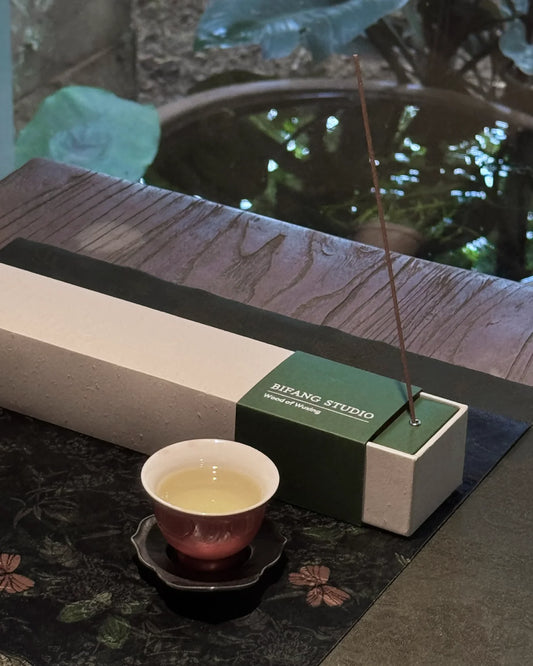
The most recognizable form, the straight incense stick, was historically used as a timekeeping device in ancient monasteries. Without a bamboo core to dilute the fragrance—a hallmark of authentic Chinese craftsmanship—the stick burns with absolute purity. Lighting a stick of premium Xianxiang is a commitment to a specific duration of time, usually thirty to forty-five minutes. During this window, you are invited to put away all devices. The burning stick becomes a visual and aromatic hourglass, gently reminding you that time is passing, and that this current moment is the only one that truly belongs to you.

Coil Incense (Panxiang): The Cyclical Nature of Existence
Coil incense is shaped in an expanding spiral, designed to burn for extended periods, from several hours to an entire day. It represents the cyclical nature of the cosmos, the changing of seasons, and the continuous flow of life. Lighting a Panxiang is an act of setting an atmosphere for a prolonged period of digital fasting. As the ember travels its circular path, it provides a steady, unobtrusive background of tranquility, perfect for a long afternoon of painting, meditating, or simply resting the eyes and soul.

Incense Powder (Xiangfen) and the Incense Seal: The Pinnacle of Mindfulness
Perhaps the most profound and engaging of all chinese incense types is the incense seal, or Xiangzhuan. This is not merely a product; it is an involved, tactile ceremony. It requires the practitioner to lay a bed of fine white ash in a brass censer, tamp it down until it is perfectly flat and resilient, and then place a carved metal stencil upon the ash. Fine aromatic powder is then gently spooned and swept into the grooves of the stencil. When the stencil is lifted, a perfect, continuous geometric pattern of incense is left behind.

This process cannot be rushed. If you are distracted, if your mind is racing with unread emails or social media metrics, your hand will tremble, and the seal will break. It demands your absolute, focused grace. Once lit, the ember slowly traces the labyrinthine path of the powder. The incense seal is the ultimate digital detox tool—it engages the hands, focuses the eyes, calms the breath, and fills the room with transcendent fragrance. You build a beautiful, intricate structure only to watch it turn to ash, a poignant lesson in impermanence and the beauty of letting go.
Curating Your Screen-Free Ritual
To experience the full restorative power of this ancient art, one must curate the environment with intention. Choose an evening to disconnect entirely. Place your phone in another room. Prepare your space by lowering the lights and perhaps brewing a small pot of loose-leaf tea. Select your incense not by what you think smells 'good', but by what your spirit requires in that moment.
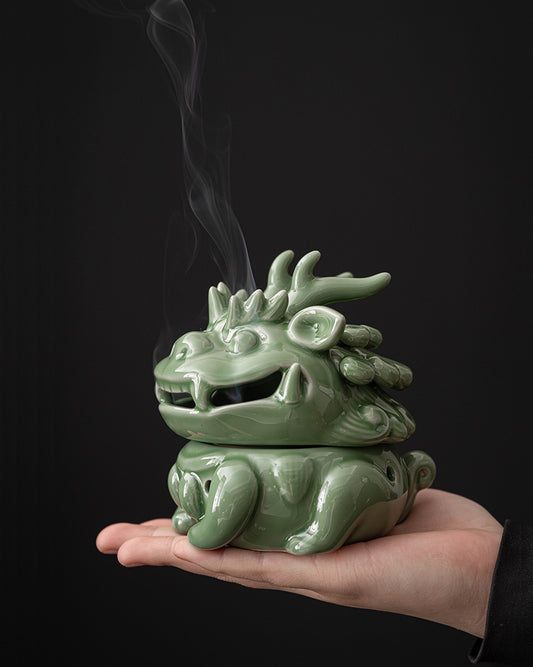
As you strike the match, watch the flame catch the wood. Gently wave out the fire, allowing the red ember to take life. As the first tendril of smoke rises, follow its path with your eyes. Watch how it catches the ambient light, how it swirls, dissipates, and perfectly maps the unseen currents of air in the room. This shifting, ephemeral sculpture of smoke is the original screen—one that nourishes rather than depletes. Inhale deeply, allowing the complex, ancient molecules of the wood to interact with your nervous system, signaling to your body that the work is done, the day is over, and it is safe to rest.
The Quiet Luxury of Slow Craftsmanship
In our modern pursuit of convenience, we have sacrificed the soul of the objects we bring into our homes. Mass-produced incense, held together with synthetic glues and infused with chemical perfumes, offers a shallow, often headache-inducing facsimile of true fragrance. The philosophy of Bifang Studio, and the essence of quiet luxury, is rooted in the return to slow craftsmanship.
Authentic chinese incense types are born from a labor-intensive, time-honored process. The resins and woods are hand-selected, ground to a microscopic fineness, bound with natural elm bark powder, and kneaded with purified water. The resulting dough is extruded, carefully shaped, and left to dry slowly in the shade. Like fine wine or aged tea, premium incense requires time to mature, allowing the volatile notes to mellow and the deep, resonant harmonies to integrate. This dedication to the slow, the handmade, and the authentic is what transforms a simple stick of incense into an artifact of profound spiritual value.
When we choose to engage with these meticulously crafted elements, we are rebelling against the disposable, hyper-speed culture of the digital age. We are making a declaration that our time, our peace, and our attention are sacred. Through the whisper of the smoke and the architecture of the ash, we find a sanctuary of our own making—a silent, fragrant space where we can finally, truly, return to ourselves.