The Calligraphy of Aether: A Visual Meditation in Silver Smoke

The Birth of Aether: An Invitation to Stillness

In an era defined by the relentless, staccato rhythm of digital algorithms and fractured attention, true luxury is no longer defined by accumulation. It is the deliberate curation of emptiness. It is the conscious claiming of time, space, and silence.

At the heart of this quiet revolution lies an ancient Chinese practice, elegantly rediscovered for the modern seeker: the art of Xiangdao (香道)—the Way of Incense. While many focus on the olfactory tapestries of aged agarwood and creamy sandalwood, there is a dimension often overlooked: the profound visual poetry of the smoke itself. Before a fragrance reaches the mind, the eyes are greeted by a silent, kinetic ballet. This is the foundation of #VisualMeditation, a practice that invites us to slow our breathing and watch the invisible "Qi" (breath) of the room take form.


Decoding the Void: Beyond Superstition to Mindfulness

For centuries, human curiosity has sought to impose narrative upon the natural world. In the West, historical lore often speaks of libanomancy—the quest to decipher hidden omens and prophecies written in curling vapors.

However, the elite, mindful approach of the Chinese literati elevates this from mere superstition to a high-art form of Chan (禅, Zen) philosophy. In Oriental aesthetics, the smoke does not predict the future; it grounds you in the majestic simplicity of the "now." The true meaning of the smoke is not an oracle, but a mirror reflecting the unvarnished reality of your internal state. When we release the need for esoteric answers, we allow the smoke to become a fleeting, ephemeral manifestation of the present moment.


The Mechanics of #VisualMeditation: Sculpting the Wind

How does one transition from passively burning incense to actively engaging in visual meditation? It requires the deliberate construction of an environment—a sartorial elegance of space.

1. The Chiaroscuro of Space

To observe the silver and azure wisps of high-quality incense, the background is paramount. Choose a room with muted, diffuse light. The gossamer threads of smoke are best traced against a dark, matte canvas—perhaps a deep lacquer screen, a minimalist stone wall, or the shadowed corner of a study.

2. The Ritual of Ignition

Light the incense with intention. Let the initial flame catch before gently waving it out. Do not blow; let the air itself extinguish the fire, a nod to the quiet reverence of the act. As the first plume rises, soften your gaze.

3. The Mirror of Breath

You will notice that the smoke mirrors the energy of the room and the rhythm of your own breath. When the mind is erratic, the smoke dances wildly. As your nervous system settles and your breath slows, the micro-currents in the room stabilize. The smoke ascends in a single, unbroken line of perfect verticality—a visual testament to mental clarity.


Chinese Ink Wash in the Air: The Zen of Impermanence

The act of watching incense smoke is akin to observing an invisible calligrapher practicing Shuimo (水墨画, Chinese ink wash painting) upon the canvas of the air. The smoke curls, folds upon itself, and stretches into impossibly thin strands before dissolving into the void.

This dissolution is a masterclass in the concept of Sunyata, or emptiness. Just as a brushstroke on rice paper captures a moment of energy, the smoke manifests the Daoist principle of Wu Wei (无为, effortless action). The smoke does not force its way; it yields to the slightest draft, bending and flowing, yet continuing its upward journey. It teaches us that grace is not born of rigid resistance, but of fluid adaptability.


The Instruments of Quietude: Selecting Your Canvas

True visual meditation cannot be achieved with synthetic materials. The modern luxury lifestyle demands a return to artisanal purity.

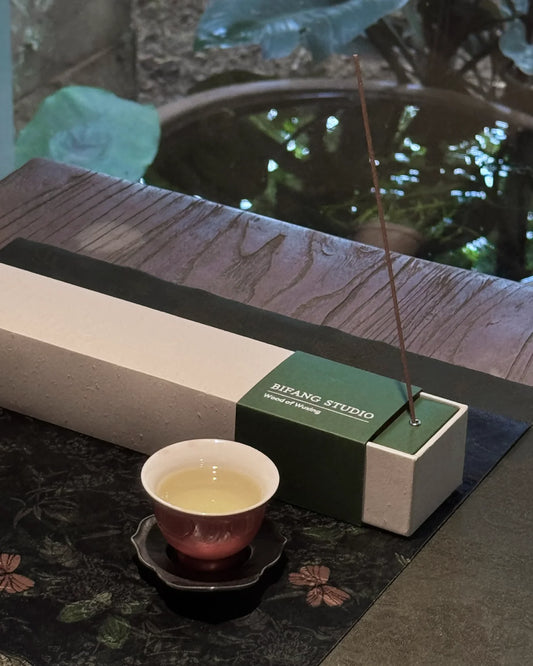
The Material: Seek pure Agarwood (Aloeswood) or Sandalwood. These natural resins produce a smoke that is extraordinarily delicate, possessing an almost liquid quality as it moves through the air, unlike the heavy, erratic smog of chemical accelerants.

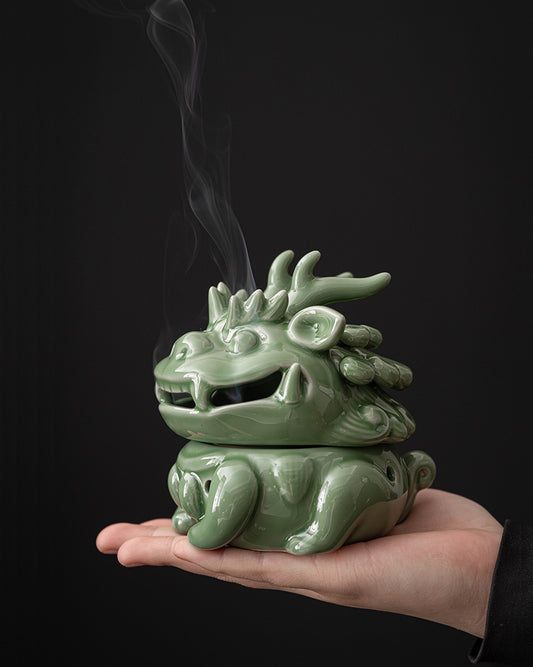
The Vessel: The burner itself must reflect the ethos of quiet luxury. At Bifang Studio, we believe the vessel anchors the ethereal. Choose from:

·Ru Kiln Porcelain: Known for its "sky-blue" glaze and subtle crackle, providing a serene pedestal for the silver smoke.

·Patinated Bronze or Liuli (Colored Glass): These materials offer a tactile weight that contrasts beautifully with the dancing air.


Epilogue: The Elegance of the Unseen

Turning our gaze toward the unspooling thread of incense smoke is a radical act of self-preservation. It is an invitation to inhabit the quietest corners of our own minds.

Through the refined lens of #ChineseIncenseCulture, we learn to appreciate the exquisite beauty of impermanence. We realize that the most profound luxuries in life are not things we can hold, but fleeting moments of perfect, undisturbed clarity. As the final ember cools and the last wisp of silver fades, the space remains transformed. The smoke has vanished, but the stillness it sculpted within the mind remains—a quiet, enduring testament to the calligraphy of aether.

返回網誌

發表留言

請注意,留言須先通過審核才能發布。

可摺疊的內容

New to Chinese Incense? (Or not sure which one to choose?)

Chinese incense is more than fragrance — it’s a ritual of balance, atmosphere, and intention. It supports focus, relaxation, and mindful living through scent and ritual.

If you’re new here, this guide will help you step by step to find the incense that fits your space, mood, and lifestyle.

→A Simple Guide to Help You Choose

Is burning incense safe for daily use?

When you choose natural plant-based incense with safe ingredients and burn it in a well-ventilated space, it is generally safe.

Our Five Element functional incense sticks is crafted with natural materials and wooden cores for a smoother burn. Compared to essential oil diffusers, incense creates a more immersive sensory experience — combining scent, smoke, and visual presence.

→Not all incense is natural. Here’s how to tell the difference.

What is the Five Element Incense?

Our incense blends are inspired by the Five Element philosophy rooted in Traditional Chinese Medicine and classical Chinese Fengshui culture. Once reserved for imperial rituals and elite practice, these formulas are now designed for everyday modern living.

·Wood — Creativity, artistic & growth
·Fire — Delight, action power & confidence
·Earth — Spiritual, stability & grounding
·Gold — Focus, clarity & energy
·Water — Relief, rest & emotional balance

Different herbs and aromas correspond to different emotional states and intentions. The Five Element system helps you choose the right incense at the right moment to support your mindset.

→Learn the difference between Five Element incense and traditional incense

→Discover curated Five Element incense combinations

How do I use incense sticks for meditation?

Burn incense sticks before or during meditation to create a clear ritual transition.

We created a simple 6-Step Incense Ritual Guide to help you build consistency and intention into your practice.

→Read the 6-Step Incense Ritual & Beginner Guide

What makes Oriental home art meaningful as a gift?

In Chinese Fengshui culture, each symbol — such as dragons, horses, guardian lions, or lotus motifs — represents blessings like protection, success, renewal, and harmony. This adds cultural depth and intention to holiday gifting.

→Do You Know the Beautiful Meanings Behind Oriental Home Art Gifts

  • Eco-Friendly

    with Thoughtful Curation
  • Safety Payment

    with Every Order
  • Natural Material

    by Ethically Sourced
1 / 3