The Whispers of Antiquity: A Guide to Chinese Incense Ingredients and the Wuxing Philosophy

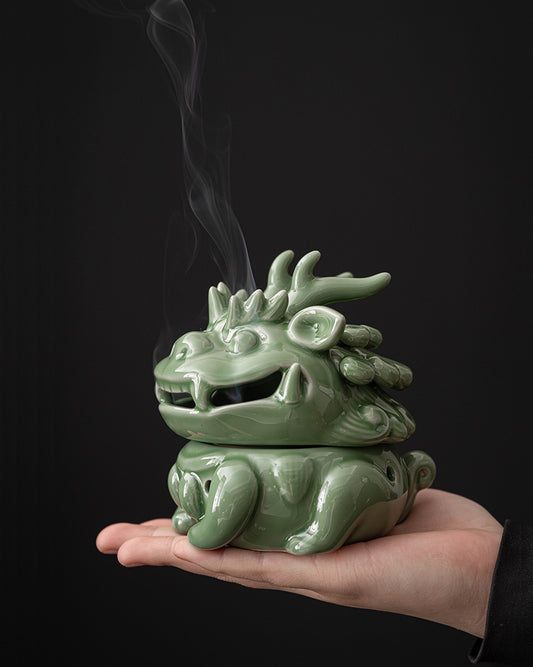
A minimalist contemporary living room at dawn featuring a premium ceramic incense burner with a delicate wisp of smoke, raw agarwood pieces, and soft morning light.

Beyond Fragrance: The Essence of Eastern Olfactory Art

To understand authentic Chinese incense ingredients is to step across the threshold of time, leaving behind the clamor of the modern world to enter a courtyard of quiet contemplation. In the realm of Xiangdao—the Way of Incense—fragrance is never merely an olfactory adornment. It is a vessel, a silent dialogue with antiquity, and a mirror reflecting the interconnected cosmos of Eastern philosophy. For millennia, the scholars, poets, and emperors of the Middle Kingdom did not view incense as a mere commodity, but as a medium of spiritual refinement. The materials gathered to create these profound scents were treated with the utmost reverence, viewed as rare treasures that carried the breath of mountains, the memory of ancient forests, and the rhythmic pulse of the universe.

At the heart of this ancient practice lies the philosophy of Wuxing, the Five Elements: Wood, Fire, Earth, Metal, and Water. This cosmological framework suggests that the universe operates through the dynamic interaction of these elemental forces, each balancing, generating, and transforming the other. When we examine traditional Chinese incense ingredients through the lens of Wuxing, we begin to perceive a masterful alchemy. The creation of a high-tier incense is not simply a matter of mixing pleasant odors; it is the deliberate orchestration of elemental energies, designed to center the mind, elevate the spirit, and resonate with the deepest chords of human emotion.

An elegant hand lighting a natural Chinese incense stick next to crystalline borneol flakes in a beautifully styled contemporary home studio.

The Wuxing Philosophy: A Symphony of Five Elements

The formulation of traditional Chinese incense is a reflection of the natural world in miniature. By carefully selecting and harmonizing ingredients according to their elemental nature, the master incense maker crafts an invisible architecture of scent. Let us journey through the Five Elements and discover how they manifest in the rarest and most revered Chinese incense ingredients.

Wood (Mu): The Scholar's Resilience

Wood is the foundation of the Eastern olfactory palette, representing growth, vitality, and the quiet dignity of nature. In the lexicon of Chinese incense ingredients, Wood is supremely embodied by Chenxiang, or Agarwood. Chenxiang is not born of a healthy tree, but of a wounded one. When the Aquilaria tree is damaged by lightning, wind, or insects, it secretes a dark, aromatic resin to heal itself over decades, sometimes centuries. This process of enduring trauma and transforming it into something of unimaginable beauty resonates deeply with the classical Chinese scholar's ideal of resilience and moral fortitude.

When a piece of aged Chenxiang is gently warmed, it does not release a loud or aggressive scent. Instead, it offers a deeply layered, subtle fragrance that speaks of damp earth, aged timber, and quiet bamboo groves shrouded in morning mist. It is the scent of a solitary pavilion in the deep mountains, where a solitary figure sits playing the guqin beneath a pale moon. Wood grounds the spirit, pulling the wandering mind back to its eternal center.

Fire (Huo): The Dance of Transformation

Fire in the Wuxing philosophy governs transformation, warmth, and the ethereal ascent of energy. In the context of Chinese incense, Fire is represented by warm, resinous spices such as Dingxiang (Cloves), Ruxiang (Frankincense), and Anxixiang (Benzoin). These ingredients carry a latent heat, a solar energy that enlivens the formula and allows the heavier, earthier notes to ascend.

Fire is the catalyst. It is the spark of the intellect and the warmth of the heart. The inclusion of these warm resins ensures that the fragrance profile does not become too heavy or melancholic. Instead, they introduce a sense of slow-burning embers, like the comforting warmth of a scholar's studio during a deep winter snowfall. The Fire element in incense is never destructive; it is a controlled, gentle warmth that coaxes the hidden virtues out of the accompanying woods and herbs, transforming raw matter into a drifting wisp of spirit.

Earth (Tu): The Grounding Anchor

Earth is the mother of all elements, symbolizing stability, nourishment, and a profound sense of return. Tanxiang, or Sandalwood, is the quintessential Earth element among Chinese incense ingredients. Unlike the melancholic depth of Agarwood, Sandalwood offers a creamy, robust, and comforting aroma. It is the scent that permeates ancient Buddhist and Daoist temples, instantly evoking a sense of solemnity and peace.

Earth ingredients also include fragrant roots and rhizomes like Gan Song (Spikenard) and Mu Xiang (Costus Root). These materials carry the dark, rich aroma of the soil from which they were pulled. In classical incense blending, Earth provides the structural integrity of the scent. It acts as the benevolent embrace that holds the more volatile top notes together, ensuring that the fragrance lingers in the room—and in the memory—long after the physical incense has turned to white ash.

Metal (Jin): The Frost on the Guqin

Metal embodies clarity, purity, and the piercing coolness of autumn air. It is the element of refinement, cutting through mental fog and awakening the senses. In the apothecary of Chinese incense ingredients, Metal is expressed through intensely cooling, crystalline substances like Bingpian (Borneol) and Longnao (Camphor). These ingredients are used with extreme restraint, measured in mere fractions.

When utilized correctly, a touch of Bingpian acts like a sudden chime of a silver bell in a silent room. It creates a sensation of pristine coldness, reminiscent of frost gathering on plum blossoms or the reflection of the moon on a still, icy lake. The Metal element pierces through the heavy woods and resins, providing an ethereal lift that clears the mind. The Song Dynasty literati highly prized this chilling clarity, viewing it as essential for entering states of deep meditation or composing poetry.

Water (Shui): The Silent Abyss

Water represents flow, mystery, and the deep, hidden reservoirs of the subconscious. It is the element of supreme adaptability. In the crafting of incense, Water is both literal and metaphorical. It is found in the binding agents—the refined nectars, purified honey, and floral dew used to roll the incense powders into pills or sticks. This moisture is crucial; it harmonizes the dry ingredients, allowing them to age and meld together over years of careful storage in porcelain jars buried in the earth.

Metaphorically, the Water element is captured by the legendary Longxianxiang, or Ambergris. Longxianxiang translates to 'Dragon's Saliva Incense,' carrying an aura of oceanic depth and profound mystery. It possesses a subtle, animalic sweetness that flows invisibly beneath the entire composition, extending the life of the scent and adding a dimension of unfathomable depth, much like a dark, silent river winding through a subterranean cave.

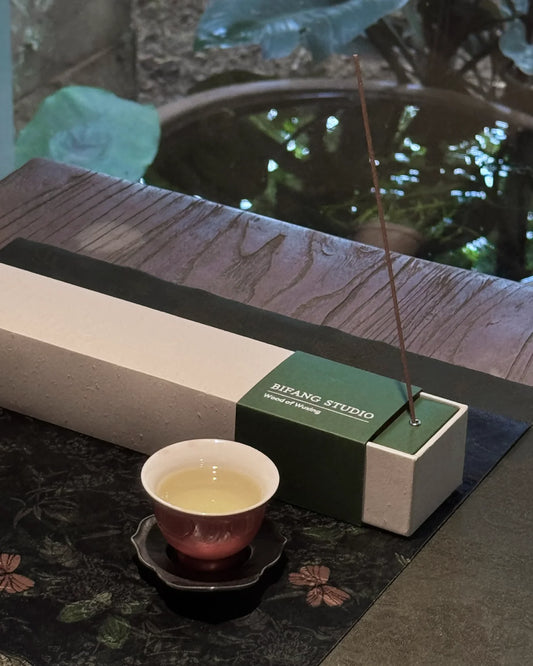
A collection of premium, slim natural incense sticks resting on a minimalist unbleached linen fabric background, showcasing high-end craftsmanship.

The Architecture of Scent: Jun, Chen, Zuo, Shi

Beyond the elemental harmony of Wuxing, the curation of Chinese incense ingredients follows a strict hierarchical structure borrowed from ancient statecraft and traditional medicine: Jun (Emperor), Chen (Minister), Zuo (Assistant), and Shi (Courier). The Emperor ingredient dictates the soul of the fragrance, while the Ministers support and expand its domain. The Assistants provide unexpected contrast—perhaps a sharp note of Metal to balance a heavy Wood—and the Couriers harmonize the entire blend, carrying the scent seamlessly to the human spirit.

This architectural approach ensures that each stick of incense is not a random assortment of pleasant smells, but a miniature kingdom in perfect harmony. It is an art form that demands patience, an encyclopedic knowledge of nature, and an unyielding commitment to excellence. To collect and experience such incense is to curate a personal museum of the invisible.

Epilogue: A Vessel for the Ethereal

To engage with authentic Chinese incense ingredients is to participate in an act of preservation. In a world defined by its relentless pace, the slow, deliberate unfurling of a classical Eastern fragrance is an act of quiet rebellion. It invites us to sit still, to listen to the breath of the Wuxing, and to observe the impermanent, graceful dance of the smoke. These ingredients are not mere botanical specimens; they are high-order cultural artifacts, bearing the wisdom of generations. They offer us a sanctuary built not of bricks and mortar, but of wood, fire, earth, metal, and water—a timeless architecture of the soul.

返回網誌

可摺疊的內容

New to Chinese Incense? (Or not sure which one to choose?)

Chinese incense is more than fragrance — it’s a ritual of balance, atmosphere, and intention. It supports focus, relaxation, and mindful living through scent and ritual.

If you’re new here, this guide will help you step by step to find the incense that fits your space, mood, and lifestyle.

→A Simple Guide to Help You Choose

Is burning incense safe for daily use?

When you choose natural plant-based incense with safe ingredients and burn it in a well-ventilated space, it is generally safe.

Our Five Element functional incense sticks is crafted with natural materials and wooden cores for a smoother burn. Compared to essential oil diffusers, incense creates a more immersive sensory experience — combining scent, smoke, and visual presence.

→Not all incense is natural. Here’s how to tell the difference.

What is the Five Element Incense?

Our incense blends are inspired by the Five Element philosophy rooted in Traditional Chinese Medicine and classical Chinese Fengshui culture. Once reserved for imperial rituals and elite practice, these formulas are now designed for everyday modern living.

·Wood — Creativity, artistic & growth
·Fire — Delight, action power & confidence
·Earth — Spiritual, stability & grounding
·Gold — Focus, clarity & energy
·Water — Relief, rest & emotional balance

Different herbs and aromas correspond to different emotional states and intentions. The Five Element system helps you choose the right incense at the right moment to support your mindset.

→Learn the difference between Five Element incense and traditional incense

→Discover curated Five Element incense combinations

How do I use incense sticks for meditation?

Burn incense sticks before or during meditation to create a clear ritual transition.

We created a simple 6-Step Incense Ritual Guide to help you build consistency and intention into your practice.

→Read the 6-Step Incense Ritual & Beginner Guide

What makes Oriental home art meaningful as a gift?

In Chinese Fengshui culture, each symbol — such as dragons, horses, guardian lions, or lotus motifs — represents blessings like protection, success, renewal, and harmony. This adds cultural depth and intention to holiday gifting.

→Do You Know the Beautiful Meanings Behind Oriental Home Art Gifts

  • Eco-Friendly

    with Thoughtful Curation
  • Safety Payment

    with Every Order
  • Natural Material

    by Ethically Sourced
1 / 3