Incense for Each Room: A Practical Guide to Home Scentscaping
Culture Hub · Home Scentscaping
Choosing incense for each room is less about assigning a permanent fragrance to every space and more about understanding what happens there. Work, gathering, arrival, dining, and rest each invite a different kind of scent ritual.

Incense for each room should begin with one practical question: what role does this space play in your life? A home office may need a clear beginning to the workday. A living room may need warmth before guests arrive. An entryway marks the transition from outside to inside, while a bedroom asks for quiet and restraint.
Chinese incense culture offers a useful way to approach these different moments. Rather than keeping every room continuously perfumed, incense can appear briefly, serve a purpose, and then fade. This makes it especially suited to modern homes where one space may change function several times throughout the day.
If you are new to the broader idea of fragrance zoning, begin with our guide to scentscaping with Chinese incense. This article goes one step further by looking specifically at how to choose incense room by room.
How to Choose Incense for Each Room
When people search for the best incense for each room, it is tempting to create a fixed formula: one incense for the bedroom, another for the living room, another for the home office. Room type is useful, but it should not be the only consideration.
A room has both a physical function and a changing role. The same living room may be social on Friday evening, quiet for reading on Sunday morning, and temporarily become a work area on Monday. The most useful incense ritual responds to what you are doing there, rather than treating the floor plan as a rigid rule.
A simple way to choose is to consider three things:
Room
Where will you burn the incense: a home office, entryway, living room, dining area, bedroom, tea corner, or another shared space?
Purpose
What is happening there: focused work, creative thinking, welcoming guests, sharing food, returning home, reading, or preparing for rest?
Intensity
How much fragrance suits the space? Smaller rooms and spaces close to fabrics usually need lighter, shorter rituals and good ventilation.
Bifang Studio’s Five Elements system can then be used as a flexible vocabulary for intention: Wood for beginnings and creativity, Fire for warmth and movement, Earth for grounding, Gold / Metal for clarity and focus, and Water for quiet and rest. These are best understood as ways to choose a mood rather than fixed rules assigning one element permanently to one room.
If you want to explore the Five Elements more deeply, visit our Five Elements incense collection.
Incense for Each Room: A Quick Guide
The table below offers a practical starting point. Think of it as a map of common room functions rather than a rigid prescription. Choose the direction that best fits how you actually use the space.
| Room | Suggested direction | Best for |
|---|---|---|
| Home office | Gold / Metal or Wood | Gold for focus, editing, study, and planning; Wood for brainstorming and creative beginnings. |
| Creative desk or studio | Wood | Sketching, writing, journaling, ideation, and beginning a new project. |
| Entryway | Earth or a quiet woody incense | Marking the transition from outside activity to the atmosphere of home. |
| Living room | Fire or Earth | Fire for social warmth and gathering; Earth for a softer, grounded everyday atmosphere. |
| Dining room / kitchen | Light Fire-inspired or restrained woody scent | Creating warmth before a meal without competing with the aroma and taste of food. |
| Bedroom | Water or another subtle scent | A short evening wind-down ritual before sleep, followed by fresh air and an unscented room. |
| Tea or reading corner | Earth, Water, agarwood, or sandalwood | Slow reading, tea, contemplation, and quieter parts of the day. |

Incense for the Home Office and Creative Desk
The best incense for a home office should help define the beginning of focused work without becoming a constant background fragrance. This is particularly useful when your desk is in a bedroom, living room, or other shared space. A short incense ritual can create an invisible boundary: this is the moment work begins.
For focus and structured work: Gold / Metal
Gold / Metal is Bifang Studio’s clearest starting point for planning, reading, analysis, study, and focused desk work. Clean and structured fragrance profiles suit moments when the environment feels mentally crowded and you want to simplify your attention.
For writing, design, and new ideas: Wood
A creative desk has a different purpose. Wood represents beginnings, growth, and generative movement within the Five Elements system. Fresh woody, green, herbaceous, or gently floral profiles can accompany sketching, writing, journaling, and early-stage creative work.
If the same desk is used for both creative exploration and analytical work, you do not need two fragrances burning at once. Use Wood when beginning or brainstorming, then Gold at another time when the work shifts toward editing, organizing, or finishing.
For a more specific practice, read our incense ritual for creative work.
Incense for the Entryway: Mark the Return Home
The entrance is one of the most meaningful transitional areas in a home. Traditional Feng Shui often treats the threshold as especially important because it is where the outside environment meets the interior. For a modern incense practice, the most useful idea is simple: the entryway can become a small ritual point for arriving home.
Rather than maintaining a strong fragrance beside the door throughout the day, consider lighting incense briefly after returning home, while changing shoes, putting down keys, or preparing tea. Earth-associated scents can support a grounded atmosphere, while agarwood or another quiet woody incense can add depth without turning the entrance into a perfume zone.
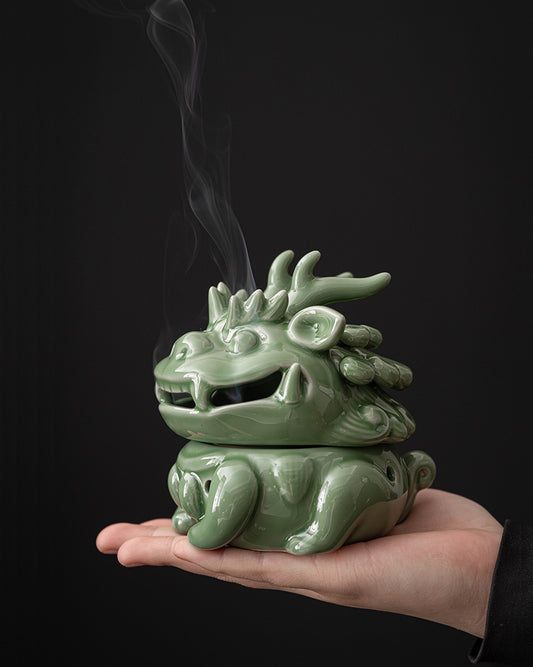
An entryway incense holder can also function as a small piece of home art. A sculptural ceramic object on a console or shelf makes the ritual visible even when incense is not burning.
Incense for the Living Room: Warmth Without Over-Scenting
The living room is often the most socially flexible space in the home. It may host conversation, music, reading, family time, or guests, so there is no single fragrance that must always belong there.
For gatherings, Fire-inspired incense can add warmth and animation. The best approach is usually to burn it before guests arrive and allow the fragrance to soften by the time the room fills. The scent should become part of the atmosphere rather than the subject of the room.
For quieter everyday use, Earth or traditional sandalwood can create a warmer, more grounded feeling. Sandalwood’s soft woody character is especially easy to pair with wood furniture, textiles, tea, and slower evening routines.
In a large open-plan living room, resist the urge to use several fragrance sources at the same time. One incense ritual, followed by an unscented interval, usually creates a clearer and more refined scentscape.
Incense for the Dining Room and Kitchen: Use Fragrance with Restraint
The dining room and kitchen require a different approach because food already provides its own complex aroma. Strong incense burning during a meal can compete with taste and make the room feel crowded.
If you want to use incense in a dining space, consider a short ritual before cooking or before guests sit down. Warm, lightly spiced, citrus-leaning, or gentle woody impressions can create a sense of welcome, but the fragrance should largely fade before the meal begins.
In the kitchen itself, ventilation matters more than fragrance layering. Incense should never be used simply to cover cooking smells. Allow the space to air naturally, then use scent later as a transition from cooking and cleanup into the next part of the evening.
This is one of the clearest examples of why incense works differently from a continuous diffuser: its value lies in having a beginning and an ending.

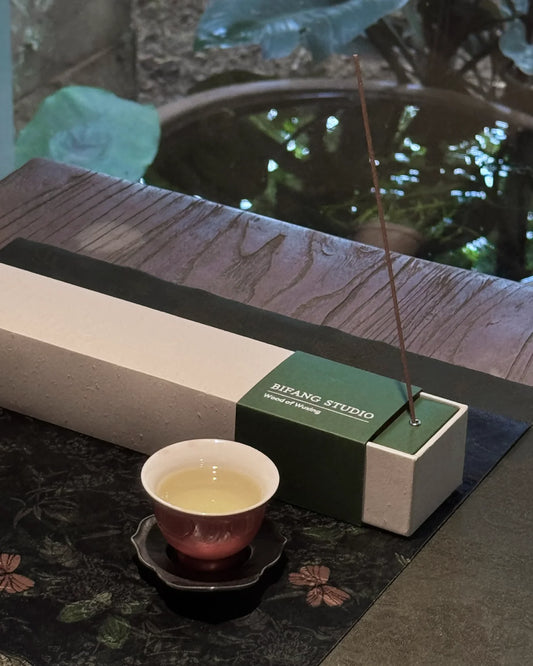
Water Element: Bedroom Incense Ritual with Natural Chinese Incense for Evening Calm
Incense for the Bedroom: Let the Scent End Before Sleep
When choosing incense for the bedroom, restraint matters more than intensity. The goal is not to keep the bedroom fragranced throughout the night. Instead, use incense as part of the transition into evening.
Water is the most natural Bifang Five Elements direction for this kind of ritual because it represents quiet, spaciousness, and doing less. Airy, cool, delicate, or deep woody profiles can accompany journaling, an evening bath, reading, or preparing the room for sleep.
Agarwood and restrained woody incense can also suit a bedroom ritual when you prefer a more traditional Chinese fragrance profile. The important point is timing: burn incense while you are awake and present, allow it to finish, ventilate the room as needed, and never leave incense burning while sleeping.
The bedroom also benefits from being scent-free for part of the day. The contrast between a short evening ritual and neutral air afterwards is what makes the fragrance meaningful.
Why Incense Works Well in Multi-Purpose Homes
Many modern homes no longer have one dedicated room for every activity. A dining table becomes a desk. A living room becomes a yoga space. A bedroom may also contain a reading chair or workspace.
This is where incense has an advantage over an always-on home fragrance system. A candle can become part of the décor and a diffuser can fade into the background, but an incense ritual is temporary. You light it, notice it, and let it end.
A home office can therefore become a focus zone in the morning and return to neutral by lunch. A living room can feel warmer before guests arrive without carrying the same fragrance into the next day. A bedroom can have an evening ritual without remaining continuously scented overnight.
If you want to think beyond individual rooms and build a broader fragrance plan around space, time, and intention, explore our complete guide to scentscaping with Chinese incense.
How to Choose an Incense Holder for Each Room
The incense holder is part of the scentscape. It should first be safe and functional, but it can also contribute to the visual atmosphere of the room.
On a home-office desk, a simple ash-catching holder keeps the ritual contained and visually quiet. In an entryway or living room, a sculptural ceramic holder can remain as a decorative object even when incense is not burning. At a tea table or reading corner, a vessel-inspired burner can create a stronger connection to traditional Chinese incense culture.
Bifang Studio’s Fengshui Tripod Incense Burner is suited to simple stick rituals, while more sculptural burners can become part of a console, tea tray, or meditation corner. Choose the holder by both function and atmosphere.
If you are comparing different forms and materials, read our guide on how to choose an incense holder.

Fire Element: Modern Living Room Scentscaping with Chinese Incense and Ceramic Holder
Room-by-Room Incense Is a Guide, Not a Rule
A thoughtful home scent plan should leave room for personal preference. If sandalwood feels natural in your bedroom, you do not need to replace it simply because another fragrance has been recommended for rest. If one agarwood incense becomes the scent you associate with arriving home, using it consistently can be more meaningful than assigning a different fragrance to every room.
The Five Elements are most useful here as a language of intention. Ask what quality a particular moment needs, then use the room as context. This creates a system that can evolve with daily life instead of turning scentscaping into another rigid set of household rules.
For readers interested specifically in traditional spatial symbolism and Feng Shui practice, our separate guide explains how to use incense for Feng Shui. Keeping that topic separate allows this guide to stay focused on the practical search question: what incense should I use in each room?
A One-Week Incense-for-Each-Room Starter Ritual
You do not need to change the fragrance of your entire home at once. Begin with several short rituals and notice which pairings feel natural enough to repeat.
- Day 1 · Home office: use Gold / Metal before focused work, planning, or study.
- Day 2 · Entryway: use Earth or a quiet woody incense after returning home.
- Day 3 · Bedroom: use Water during an evening reading or journaling ritual, then allow the scent to end before sleep.
- Day 4 · Creative desk: use Wood before writing, sketching, or beginning a new idea.
- Day 5 · Living room: use Fire briefly before a social evening or shared music.
- Weekend · Tea or reading corner: try agarwood, sandalwood, Earth, or Water and notice which scent feels most natural with a slower ritual.
- Then simplify: repeat only the two or three room-and-scent pairings that genuinely improve the rhythm of your home.
Incense for Each Room FAQ
What is the best incense for a home office?
For focused desk work, Bifang Studio’s Gold / Metal Element is the clearest starting point. For brainstorming, writing, design, or creative beginnings, Wood is a better fit. Use incense briefly to mark the start of work rather than keeping the room scented all day.
What incense is best for the living room?
It depends on how the living room is being used. Fire-inspired incense can add warmth before guests arrive, while Earth or a gentle sandalwood can suit quieter reading, tea, or everyday use. In either case, avoid using several strong fragrance sources at once.
Should I burn incense in the bedroom?
You can use incense as a short wind-down ritual while you are awake, but never burn incense while sleeping. Allow it to finish, ventilate the room as needed, and let the bedroom return to neutral air before bedtime.
Can I burn incense in the kitchen or dining room?
Yes, but timing matters. Use incense before cooking or before a meal rather than while eating, and choose restrained fragrance so it does not compete with food aromas. Good ventilation is especially important in kitchens.
Can I use the same incense in every room?
Yes. Scentscaping does not require a large fragrance collection. If one incense feels naturally connected to your home, you can use it in different rooms at different times. The ritual and timing can create distinction even when the fragrance stays the same.
Do different rooms have fixed Five Elements in Feng Shui?
For this guide, the Five Elements are used as a flexible way to choose scent by purpose and atmosphere rather than as fixed room assignments. If you want to explore traditional Feng Shui applications more specifically, read our dedicated guide to using incense for Feng Shui.