Breath of the Void: The Minimalist Incense Burner and the Five Elements of Wuxing

The Architecture of Emptiness
In the realm of traditional Eastern aesthetics, the highest form of presence is often found in absence. A minimalist incense burner is not merely an accessory for the home; it is an altar of stillness. Drawing profound inspiration from the classical Chinese artistic philosophy of liubai—the intentional and masterful preservation of blank space—the unadorned vessel invites the human mind to wander far beyond the physical realm. In a modern world saturated with ceaseless noise and visual clutter, the minimalist incense burner stands as a silent, unwavering guardian of inner peace. It is a sophisticated medium through which the ancient art of incense is translated for the contemporary soul, offering a sanctuary of quiet magnitude.
Wuxing: The Invisible Symphony of Scent
To truly comprehend the depth of Chinese incense culture is to understand Wuxing, the ancient philosophical framework of the Five Elements: Earth, Metal, Water, Wood, and Fire. The seemingly simple ritual of lighting incense within a minimalist incense burner is, in reality, a silent orchestration of these five cosmic forces. It is a miniature alchemy of nature, capturing the universe's infinite cycles of generation and overcoming within the refined boundaries of a single, elegantly crafted object. When you engage with this vessel, you are participating in a dialogue with the cosmos.
Earth: The Foundation of Stillness
At the very core of a minimalist incense burner lies the element of Earth (Tu). Whether crafted from raw, unglazed clay, dense ceramic, or refined porcelain, the vessel itself is born directly from the soil. In traditional Chinese thought, Earth represents unparalleled stability, nourishment, and grounding. A masterfully designed burner embraces this earthy origin with tactile textures and a quiet, weighty presence. It deliberately avoids clamoring for attention. Instead, it rests upon your desk or tea table like a solitary stone in a Zen garden, offering a profound anchor for the wandering mind long before the first curl of fragrant smoke even appears.
Metal: The Restraint of Form
The aesthetic language of the minimalist incense burner is inextricably defined by Metal (Jin), an element that embodies structure, clarity, and unyielding restraint. In both literal material—perhaps a brushed brass incense holder hidden within, or a subtle copper inlay—and in broader metaphor, Metal dictates the clean, uncompromising lines of the design. The austere geometry reflects the rigorous discipline of the ancient literati, the scholars who actively sought the purification of thought through the deliberate elimination of the unnecessary. This metallic precision elevates the burner from a utilitarian object to a sculptural masterpiece, echoing the solemnity and dignity of ancient bronze ritual vessels.
Water: The Ethereal Flow
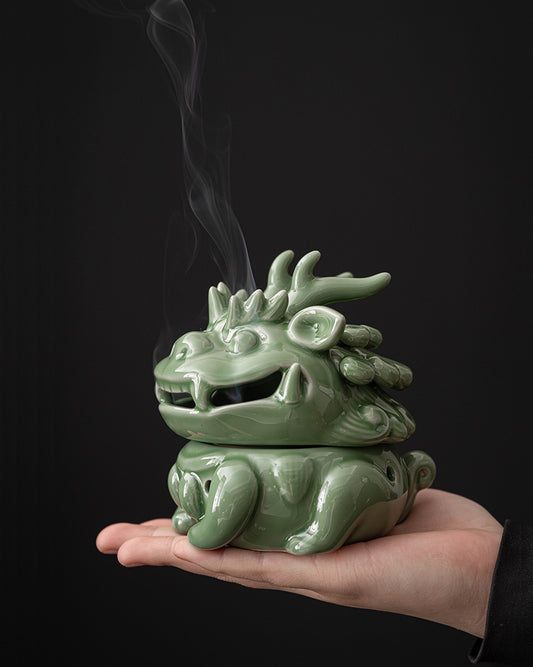
Though unseen in its liquid state, Water (Shui) is ever-present in the captivating movement of the fragrant smoke. As the incense burns, the delicate plume dances, lingers, and cascades, flawlessly mimicking the fluid grace of mountain streams and morning mists rolling through the remote valleys of Huangshan. The ancient philosopher Laozi wrote that the highest good is like water, benefiting all things without contention. The minimalist incense burner subtly frames this ephemeral flow, allowing the smoke to drift effortlessly through the ambient air. The striking contrast between the rigid, static vessel and the fluid, unpredictable smoke creates a visual poetry that naturally calms the breath and softens the gaze.
Wood: The Botanical Soul
The element of Wood (Mu) resides intrinsically within the incense itself—the enduring life force of the forest, carefully distilled into a slender stick or a raw, precious piece of Chenxiang (aloeswood). Wood represents organic growth, vitality, and the deep, silent wisdom of ancient trees that have weathered centuries. When placed thoughtfully within a minimalist incense burner, the organic nature of the wood bridges the artificial gap between indoor living spaces and the vast, untamed wilderness. The scent released is entirely devoid of artificiality; it is a purely botanical memory, carrying the complex, resonant notes of rain-soaked earth, aged bark, and the slow, deliberate passage of time.
Fire: The Alchemy of Spirit
Finally, there is Fire (Huo), the ultimate catalyst of transformation. In the sophisticated context of Eastern incense culture, the fire is never a roaring, destructive flame; it is a microscopic, glowing ember—a perfectly contained and disciplined heat. This subtle, hidden fire gradually consumes the physical wood to release its invisible spirit into the heavens. The minimalist incense burner cradles this fragile ember with utmost safety, acting as the sacred crucible where physical matter seamlessly transitions into ethereal energy, and fragrance becomes pure emotion. It is a quiet, ongoing reminder of the ephemeral nature of existence and the beauty of impermanence.

A Bridge Across Millennia: The Scholar's Ritual
In classical Chinese literature, the deliberate act of burning incense was a strict prerequisite for any intellectual or spiritual pursuit. Before unrolling a rare calligraphy manuscript, striking the strings of the guqin, or tasting an aged Pu'er tea, a scholar would invariably ignite incense to purify the atmosphere and center the mind. A high-end minimalist incense burner inherits this profound cultural legacy. Stripped of ostentatious ornamentation and superfluous detail, it distills the ancient ritual into its most honest, potent form. It extends an invitation to partake in an intimate, wordless dialogue with antiquity. As the rich scent unfurls into the room, the rigid boundaries between the distant past and the present moment dissolve gracefully, leaving only a profound sense of mental clarity.
The Vessel as a Timeless Heirloom
True luxury is perpetually measured by an object's intrinsic capacity to age with grace and dignity. A meticulously crafted minimalist incense burner is conceived not for fleeting seasonal consumption, but for lifelong companionship. With each deliberate use, the natural oils of the incense and the gentle touch of your hands impart a subtle, irreplaceable patina to the vessel's surface. Over the years and decades, the burner acquires a unique, living character, absorbing the quiet memories, the profound silences, and the myriad fragrances of the intimate spaces it has inhabited. It ultimately transcends its physical, material boundaries to become a spiritual heirloom, a silent yet eloquent witness to your personal evolution and refined taste.
The Echo of the Void
To possess and utilize a minimalist incense burner is to consciously curate a sanctuary of the mind. It represents an unwavering commitment to the philosophy of less, an understanding that true abundance is found in restraint. In this deliberate space, every refined curve, every cast shadow, and every wisp of drifting smoke is imbued with absolute intention. When the fragile ember finally fades and the soft ash cools, the physical fragrance may gently dissipate into the ether, but the profound tranquility it leaves behind remains permanently etched into the architecture of the room. This is the ultimate, crowning gift of Eastern incense culture: the profound realization that the most absolute beauty often resides in the quiet, lingering echo of the void.