Echoes in the Ash: Understanding Chinese vs Japanese Incense Differences

The Architecture of Smoke
Fragrance, by its very nature, is a fleeting architecture. It constructs invisible pavilions in the air, only to dissolve into the quietude of a scholar's studio. When navigating the realm of high Eastern olfaction, connoisseurs and collectors inevitably encounter a subtle yet profound dialogue: the Chinese vs Japanese incense differences. To the uninitiated, burning fragrant wood is merely a method to scent a room. Yet, to those who understand the profound depths of Eastern aesthetics, it is a spiritual vessel, an artifact of time, and a sophisticated medium for introspection.
The Philosophical Roots: Wuxing and Wabi-Sabi
Chinese Xiangdao: The Alchemy of the Five Elements
The traditional Chinese approach to fragrance, known as Xiangdao, is inextricably bound to the ancient philosophy of Wuxing—the Five Elements. In the eyes of the classical Chinese literati, a sophisticated incense blend is not a mere commodity; it is a meticulously calibrated microcosm of the universe, requiring absolute harmony.
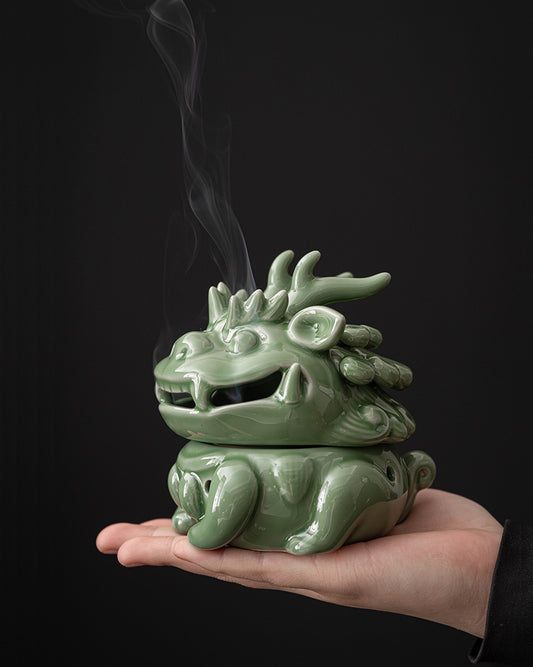
This philosophy dictates the entire lifecycle of the incense. Wood (Mù) provides the eternal soul—the ancient agarwood (Chenxiang) and creamy sandalwood that ground the wandering mind. Water (Shuǐ) tempers the raw aggression of nature; classical Song Dynasty recipes often demand that these noble woods be steeped in mountain spring water, the dew collected from winter plum blossoms, or aged honey, taming their inherent fire. Gold or Metal (Jīn) is represented by the meticulously forged bronze censers and the precise, cold tools used to shape the aromatic matter. Fire (Huǒ) serves as the catalyst, the slow, silent combustion that liberates the locked memories of the ancient trees. Finally, Earth (Tǔ) is the ceramic vessel and the bed of pressed white ash, the grounding force that cradles the ember in absolute, unwavering stillness.
Understanding Chinese incense requires recognizing this alchemical balance. It is a deeply medicinal and spiritual practice designed to nourish the vital energy (Qi) and align the human spirit with the rhythms of nature.
(Learn how to choose Chinese Incense and your element →)

Japanese Kodo: The Aesthetic of Impermanence
Conversely, the Japanese Way of Incense (Kodo), while historically rooted in early Chinese Buddhist imports during the Tang Dynasty, evolved into a distinctly different philosophical expression. Influenced heavily by Zen Buddhism and the aesthetic of Wabi-Sabi, Japanese incense shifted its focus toward the beauty of impermanence and profound minimalism.
Where the Chinese tradition seeks a harmonious medicinal alchemy, the Japanese tradition often seeks to isolate and elevate a singular, fleeting moment of beauty. The differences lie not in the superiority of one over the other, but in their ultimate spiritual destinations. The Japanese approach is a quiet meditation on the transient nature of existence, akin to watching cherry blossoms fall onto a quiet temple pond.
Material and Craft: The Anatomy of a Fragrance
The Chinese Approach: Raw, Untamed Elegance
The crafting techniques highlight some of the most distinct Chinese vs Japanese incense differences. Chinese artisans prioritize the raw, unadulterated energy of the botanical ingredients. Ancient compendiums, such as the Xiang Sheng (History of Incense), detail complex blending techniques that read more like traditional Chinese medicine prescriptions than simple perfumery.
A high-grade Chinese incense often possesses a rugged, profound profile. It does not attempt to hide the earthy, sometimes animalic notes of wild agarwood. Instead, it frames them, utilizing natural binders and extensive aging processes to let the raw materials speak with their true, untamed voices. The smoke is often thicker, carrying a weight and presence that settles profoundly into the architecture of a room, transforming the space into a sanctuary of ancient wisdom.
(Learn A 5,000-Year Journey Through Chinese Incense History→)

The Japanese Approach: Precision and Delicacy
Japanese incense crafting is renowned for its unparalleled precision and consistency. Artisans frequently employ a neutral botanical binder known as Makko (powder of the Tabu-no-ki tree) to ensure a perfectly even, delicate burn. The extrusion process in Japan is highly refined, resulting in uniform sticks that burn with a minimal, almost ethereal wisp of smoke.
The olfactory profile of Japanese incense tends to be lighter, sweeter, and more linear. It is designed not to overpower, but to gently tint the atmosphere. It is the olfactive equivalent of a meticulous watercolor painting—subtle, precise, and requiring a quiet mind to fully appreciate its delicate nuances.
The Ritual of Scent: From the Scholar's Desk to the Zen Tatami
The Chinese Scholar's Respite
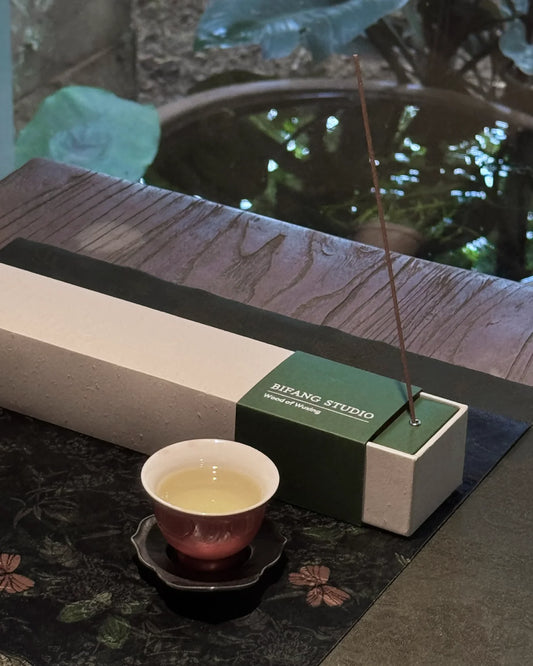
In classical Chinese culture, the burning of incense was inseparable from the life of the literati. It accompanied the reading of poetry, the playing of the Guqin, and the brewing of rare teas. One of the most sophisticated expressions of this is the making of an incense seal (Xiangzhuan). This practice involves gently tamping ash into a censer and laying a continuous trail of incense powder through a deeply symbolic metal stencil—often shaped like lotus flowers or auspicious characters.
Lighting the incense seal is an exercise in supreme patience and grace. As the invisible fire slowly consumes the powder trail, it marks the passage of time. It is a private communion with antiquity, where the smoke murmurs secrets of distant dynasties and moss-covered mountains.
(Learn The Art of Scent-Scaping→)

The Japanese Art of Listening
In Japan, the formalized ritual of Kodo elevates the interaction with scent to a highly structured ceremony. Practitioners do not merely smell the fragrant wood; they listen to it (Monko). Small chips of precious aloeswood are heated—not burned—on a mica plate over a meticulously shaped cone of white ash. The participants pass the censer in silence, deeply inhaling the invisible aromatic profile, seeking to identify the subtle characteristics of the wood.
This structural rigidity demands total presence. It is a communal yet profoundly solitary experience, stripping away the distractions of the modern world until nothing remains but the quiet dialogue between the human soul and the fragrant wood.
A Final Reflection on Eastern Olfaction
To navigate the Chinese vs Japanese incense differences is to walk two divergent paths up the same sacred mountain. Chinese incense offers a profound, medicinal immersion into the ancient philosophy of Wuxing—a raw, majestic symphony of nature's deepest elements. Japanese incense offers a refined, Zen-infused meditation—a delicate, precise whisper that honors the transient beauty of the present moment.
For the discerning collector, these creations transcend the realm of mere consumer goods. They are curated artifacts of spiritual luxury. Whether one chooses the deep, resonant alchemy of a Chinese agarwood blend or the ethereal, minimalist grace of a Japanese stick, the ultimate purpose remains identical: to elevate the mind, to purify the space, and to find an unwavering stillness within the endless movement of the world.
(Learn What Time Should You Burn Incense→)