The Architecture of Silence: Unique Gifts for Meditation Lovers Rooted in Eastern Olfactory Wisdom
The Pursuit of Formless Luxury
In an era defined by perpetual motion and transient digital noise, the true luxury of our time is undisturbed stillness. For those who cultivate mindfulness, the physical environment is not merely a backdrop, but an active participant in the journey inward. When seeking unique gifts for meditation lovers, one must look beyond conventional offerings and venture into the realm of the profound. The Chinese incense tradition, a practice refined over millennia by emperors, monks, and literati, offers a sophisticated answer. It is an art form that transcends mere fragrance, transforming the ephemeral nature of smoke into a structural architecture for the mind.
To gift an authentic Eastern incense experience is to offer an artifact of time and philosophy. It is a quiet acknowledgment of the recipient's inner depth, a gesture steeped in profound respect. These creations are not commodities; they are cultural carriers, whispering the poetic legacy of ancient dynasties where the simple act of listening to incense was considered the pinnacle of refined living.

The Poetics of Scent in Antiquity
Shadows of Pine and Whispers of Bamboo
In classical Chinese literature, scent is rarely described merely by its olfactory notes. Instead, it is invoked through imagery—the mist enveloping an empty mountain after an autumn rain, or the solitary moonlight filtering through a dense bamboo grove. The Tang Dynasty poet Wang Wei often captured this delicate intersection of nature and consciousness, where the boundaries between the self and the universe dissolve into tranquil emptiness.
An exquisite incense offering bridges the tangible and the ethereal. As the delicate plume ascends, it weaves an invisible tapestry that insulates the space from worldly anxieties. For the dedicated practitioner, this is an invaluable tool. The subtle, lingering aroma serves as a gentle anchor, holding the wandering mind steady, allowing for a deeper plunge into meditative states. It is a sensory manifestation of philosophical Daoism—yielding, pervasive, and infinitely powerful.
The Wuxing Symphony: A Harmonious Alignment
The mastery of traditional Chinese incense is inextricably linked to the concept of Wuxing, the Five Elements. This ancient philosophical framework—Wood, Fire, Earth, Metal, and Water—governs the cosmos and the human spirit. A meticulously curated incense set naturally embodies these five energies, making it one of the most conceptually complete and unique gifts for meditation lovers. Understanding this interplay elevates the act of burning incense from a simple habit to a profound spiritual ritual.

Wood: The Root of Vitality and Time
Wood is the foundation, representing growth, rooting, and the passage of centuries. In the realm of high-tier incense, this is embodied by the noble woods: Agarwood (Chenxiang) and Sandalwood (Zhantan). True Agarwood is born of trauma and time; it is the resinous heartwood created when the Aquilaria tree heals its own wounds over decades, even centuries. Gifting a piece of aged Agarwood is gifting crystallized time. Its deeply resonant, complex aroma speaks of endurance and silent strength, grounding the meditator and connecting their breath to the ancient earth.
Fire: The Alchemy of Transformation
Fire in the Eastern incense tradition is never a violent, consuming blaze. It is the hidden ember, the masterclass in restraint. Whether nestled beneath a bed of pure white ash or slowly traveling along a pressed seal of incense powder, the fire represents transformation. It is the vital spark that releases the soul of the wood. For the meditative mind, watching this slow, deliberate burn is a reflection of the internal alchemy—the gentle dissolution of ego and the quiet illumination of awareness.
Earth: The Vessel of Stillness
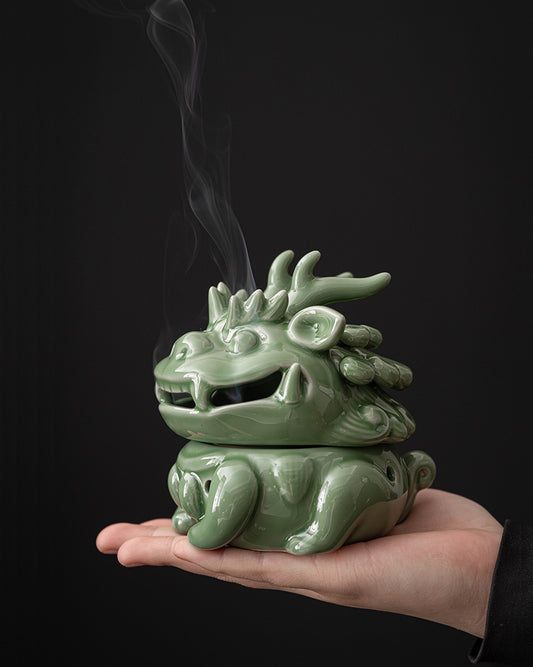
Earth is the grounding force, manifesting in the physical vessel of the censer. Crafted from unglazed clay, refined porcelain, or celadon, the censer is born from the earth and purified by the kiln. It holds the pristine ash, a bed of profound stillness upon which the ritual unfolds. The tactile sensation of holding a perfectly proportioned ceramic vessel provides a sense of gravity and permanence. It reminds the practitioner to remain rooted, offering a stable foundation for the mind to rest upon.
Gold: The Precision of Clarity
Gold brings discipline, clarity, and focus to the practice. This element is represented by the meticulously forged incense tools—the feather, the tamp, the spatula, and the chopsticks—crafted from brass, bronze, or silver. The preparation of the incense ash requires a steady hand and a quiet mind. It is a moving meditation in itself. The cool, weighty precision of Gold tools demands absolute presence, effortlessly drawing the practitioner away from scattered thoughts and into the singular, focused moment of preparation.
Water: The Fluidity of the Formless
Though seemingly absent in the fiery ritual of incense, the element of Water is profoundly present in its fluid expression. The Daoist sage Laozi taught that water is the most powerful element because it is yielding and formless. In the incense ceremony, water manifests as the graceful, languid flow of the fragrant smoke. It mimics the gentle currents of a quiet stream, drifting, parting, and eventually dissipating into the void. Meditating upon this fluid motion teaches the art of letting go, embodying the ultimate spiritual detachment.
Curating Unique Gifts for Meditation Lovers
Artifacts of Spiritual Resonance
When selecting a gift for someone deeply committed to their inner journey, one must prioritize authenticity and intention. Mass-produced fragrances, laden with synthetic compounds, assault the senses and agitate the mind. In contrast, natural, culturally rich incense offerings act as spiritual resonance chambers.
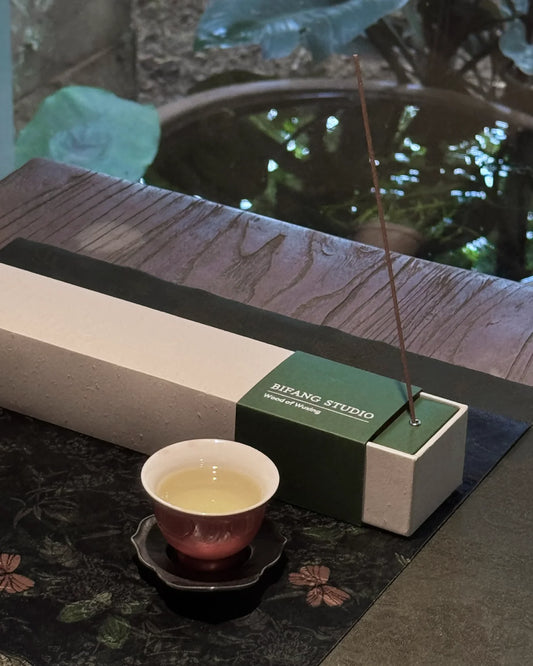
Consider the presentation of a bespoke incense kit, housed in a handcrafted wooden cabinet, containing aged resins, a celadon burner, and polished brass implements. Such an assemblage is not merely an accessory for the home; it is a portable sanctuary. It requires the recipient to slow down, to engage with the materials, and to participate in a ritual that has guided seekers of enlightenment for generations. This elevation of an everyday object into an object of veneration makes it the ultimate expression of care.
The Elegance of Restraint
A Legacy in the Air
To engage with the traditional arts of the East is to embrace the elegance of restraint. It is an understanding that the most profound statements are often whispered, not shouted. In offering these meticulously crafted artifacts as unique gifts for meditation lovers, you are providing a key to an unseen world. You are gifting the scent of ancient libraries, the silence of snow-capped peaks, and the enduring wisdom of the Five Elements.

Long after the final wisp of smoke has vanished, the impression remains—a subtle realignment of the spirit, a breath drawn a little deeper, a moment of absolute, pristine clarity. This is the true power of Eastern olfactory art. It is a legacy woven into the very air we breathe, a quiet testament to the timeless pursuit of inner peace.