Whispers of the Wood: The Eastern Art of Burning Incense

In the quietude of a secluded study, where the shadows lengthen and the outside world fades into an indistinguishable murmur, the simple act of lighting incense becomes a profound communion with time. For centuries, the Eastern literati have approached fragrance not merely as an olfactory adornment, but as a discipline of the mind—a practice known as Xiangdao, or the Way of Incense. To engage with this tradition is to step away from the transient noise of modern existence and enter a sanctuary of stillness. When one seeks to understand how to burn incense sticks properly, one is essentially learning the ancient language of the elements, seeking harmony within and without.
The Cosmology of Scent: Embracing the Five Elements
In classical Chinese philosophy, the universe is maintained by the delicate equilibrium of Wuxing—the Five Elements. A true incense ritual is a microcosm of this cosmic dance, requiring each element to be present, respected, and balanced. The incense stick is far from a mere consumable object; it is a meticulously crafted cultural carrier, holding the spirit of ancient forests and the wisdom of generations.

Wood (Mu): The Vessel of Life
The foundation of the ritual rests in Wood. This is the incense stick itself, composed of precious resins like aged agarwood (Chenxiang) or revered sandalwood (Laoshan Tan). These woods have endured decades, sometimes centuries, of weathering, illness, and transformation in the deep mountains. They are archives of nature's memory. When you hold a stick of premium incense, you are holding the crystallized essence of time, waiting to be awakened.
Fire (Huo): The Gentle Catalyst
Fire is the element of transformation. In the context of Eastern aesthetics, the fire applied to incense must never be violent or consuming. It is a disciplined spark. The flame serves only as a brief catalyst to transition the physical wood into the ethereal realm of scent. It teaches us restraint—harnessing power without allowing it to become destructive.
Earth (Tu): The Grounding Sanctuary
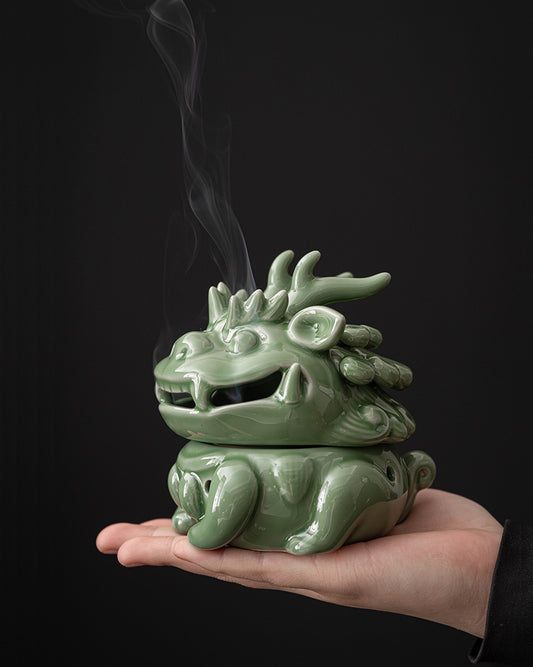
Earth is represented by the censer, often forged from rich clay, celadon, or porcelain. The vessel provides a grounding counterweight to the rising smoke. It catches the falling ash, reminding us of the cyclical nature of all things—from dust to form, and from form back to dust. The censer is the silent witness to the ritual, offering stability and grace.
Metal (Jin): The Discipline of Form
The element of Metal is found in the finely crafted tools used to prepare the censer and hold the incense. Metal represents structure, clarity, and precision. It ensures that the stick stands perfectly upright, a posture of dignity and reverence. The coolness of the metal balances the warmth of the ember, creating an environment of sophisticated restraint.
Water (Shui): The Flow of the Unseen
Though not visibly poured, Water is ever-present in the humidity of the ambient air and the fluidity of the smoke. As the Tang dynasty poet Wang Wei wrote of the empty mountain after a fresh rain, water softens the atmosphere. The moisture in the air interacts with the burning resin, dictating whether the smoke rises in a straight, solitary pillar or cascades gently like a tranquil stream over river stones.
How to Burn Incense Sticks Properly: A Ritual of Mindfulness
Understanding the theoretical harmony of the elements naturally leads to the physical practice. For those who curate their living spaces with intention, mastering how to burn incense sticks properly is an essential refinement of lifestyle. It is a sequence of deliberate, graceful movements that prepare the mind for introspection.
1. The Prelude: Cleansing the Environment
Before the incense is touched, the space must be prepared. Clear the immediate area of visual clutter. Ensure the air in the room is still; close heavy windows to prevent drafts from disrupting the smoke, but allow a subtle flow of oxygen to keep the room from feeling stifled. This physical clearing is a prelude to the mental clearing. One cannot appreciate the nuance of a high-grade agarwood if the mind is entirely preoccupied with worldly anxieties.
2. The Ignition: Awakening the Wood
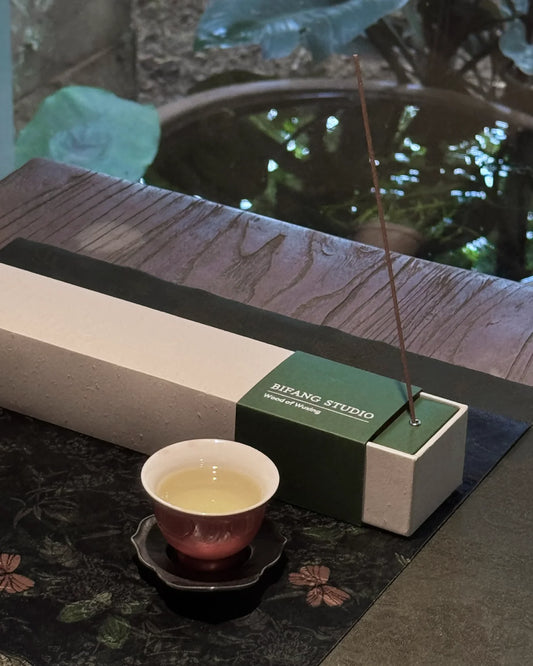
Take the incense stick delicately between your fingers. When introducing it to the flame, do so with patience. Allow the tip to catch the fire, letting it burn for just a fleeting second. The most crucial aspect of how to burn incense sticks properly lies in the extinguishing of the flame. Never blow on the incense with your breath. In Chinese tradition, breath carries human turbulence and impurities. Instead, extinguish the flame by gently fanning it with your hand, or by a swift, vertical downward motion of the stick. The resulting ember should be a quiet, glowing ruby—steady and undisturbed.

3. The Placement: Establishing Demeanor
Place the unlit end of the stick into your chosen holder or firmly into the carefully leveled ash of your censer. Ensure the stick is perfectly vertical. A straight stick reflects an upright mind. Once placed, step back slightly. The ritual of physical preparation is complete, and the spiritual engagement begins.
The Poetics of Scent: Listening to the Fragrance
In the highest echelons of Chinese culture, one does not merely "smell" incense; one "listens" to it (Ting Xiang). Smelling is an involuntary biological function, but listening requires active presence, deep focus, and an open heart. As the smoke begins to thread its way upward, follow its journey. Observe how it dances, momentarily manifesting forms before dissolving into the void.
Close your eyes and breathe deeply from the lower abdomen. The fragrance of a masterful incense blend unfolds in layers. The initial note may be crisp and woody, slowly melting into a profound, sweet earthiness, and finally leaving a lingering, cool resonance in the throat and mind. It is a symphony written in vapor. Let the scent wash over your senses, washing away the fatigue of the mundane.

A Legacy of Quietude
To integrate this practice into your daily life is to build a sanctuary of high-end cultural elegance within your own walls. The incense stick is a companion for solitary reading, a silent guest during intimate tea gatherings, and a vehicle for meditation. It asks for nothing yet gives entirely of itself.
Ultimately, learning how to burn incense sticks properly is not about adhering to rigid rules, but about cultivating a state of grace. It is a testament to the belief that true luxury is not found in loudness or excess, but in restraint, subtlety, and the profound appreciation of a fleeting moment. As the final ember fades and the room is left with a memory of the ancient forest, one finds that the mind, too, has settled into a deep, enduring peace.