The Elegance of Stillness: How to Do an Incense Ritual at Home

The Origin of Fragrance: A Dialogue with Antiquity
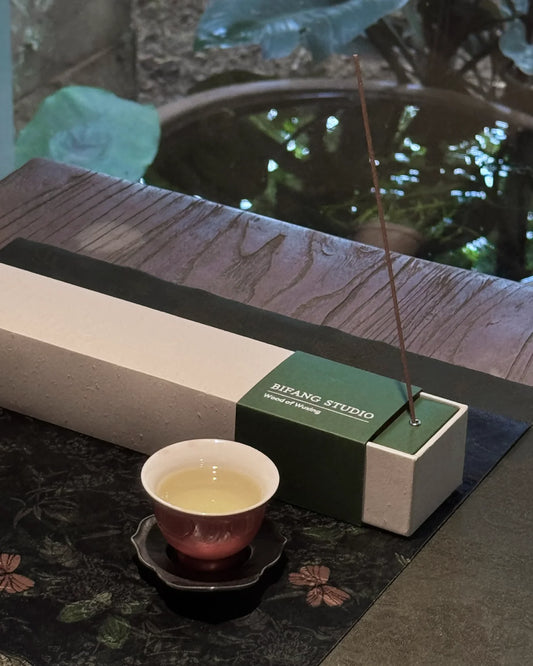
In an era defined by relentless clamor and transient digital interactions, true luxury resides in the mastery of time and the cultivation of inner stillness. For centuries, the Chinese literati sought this profound quietude through Xiangdao, the Way of Incense. It is a practice that transcends mere olfactory indulgence; it is an intimate dialogue with antiquity, a philosophical pursuit, and a tangible manifestation of poetic grace. Learning how to do an incense ritual at home is not merely about making a room smell pleasant. It is about creating a sanctuary, a deliberate pause wherein the mind can wander through the vast landscapes of classical Eastern aesthetics.
To engage with authentic incense—be it the deeply resinous complexity of ancient agarwood (Chenxiang) or the creamy, meditative warmth of aged sandalwood (Laoshan Tan)—is to interact with a high-order cultural artifact. These botanical treasures are not simple consumer goods; they are geological and biological miracles. They represent decades, sometimes centuries, of a tree's quiet healing process, capturing monsoons, sunlight, and the silent breathing of the earth. When we partake in an incense ritual, we are releasing time that has been solidified.
The Philosophy of Wuxing: The Universe in a Censer
At the heart of the traditional Chinese incense ritual lies the ancient philosophical framework of Wuxing, the Five Elements. This system observes that the universe is governed by the cyclical interactions of Wood, Fire, Earth, Metal, and Water. A properly conducted incense ceremony is a miniature replication of this cosmic equilibrium.
Wood (Mu): The foundational element. It is represented by the fragrant material itself—the pulverized heartwood of rare trees. Wood embodies vitality, growth, and the quiet endurance of nature.
Fire (Huo): The catalyst of transformation. In a sophisticated ritual, fire is never aggressive or open. It is a restrained, glowing ember, representing warmth, illumination, and the gentle passing of time.
Earth (Tu): The grounding force. This is manifested in the ceramic censer and the pristine bed of white ash within it. Earth holds the fire and supports the wood, offering a sterile, neutral canvas for the fragrance to unfold.
Gold/Metal (Jin): The tools of precision. The slender chopsticks, the delicate spoon, and the intricate incense seal mold are traditionally forged from brass, copper, or silver. Metal introduces order, clarity, and discipline to the ritual.
Water (Shui): The fluid essence. Though seemingly absent in a dry censer, Water is represented by the ethereal smoke. It flows, cascades, and dissipates with the liquid grace of a traditional Chinese Shan shui (mountain and water) ink painting. It is the formless taking form, reflecting the adaptability of the mind.

How to Do an Incense Ritual at Home: The Seal Method
Among the various techniques of Xiangdao, the Incense Seal (Xiangzhuan) is perhaps the most deeply contemplative practice for the home. It requires patience, steady hands, and a quiet heart. Here is a guide to conducting this elegant ritual.
Preparing the Space: The Canvas of Stillness
Before touching the tools, one must prepare the environment. Choose a quiet corner free from drafts, as even a slight breeze can disrupt the delicate architecture of the smoke. Cleanse your hands. This physical purification signals to the mind that a transition is occurring—from the chaos of the mundane to the sanctity of the present moment.
Assembling the Implements: The Scholar's Tools
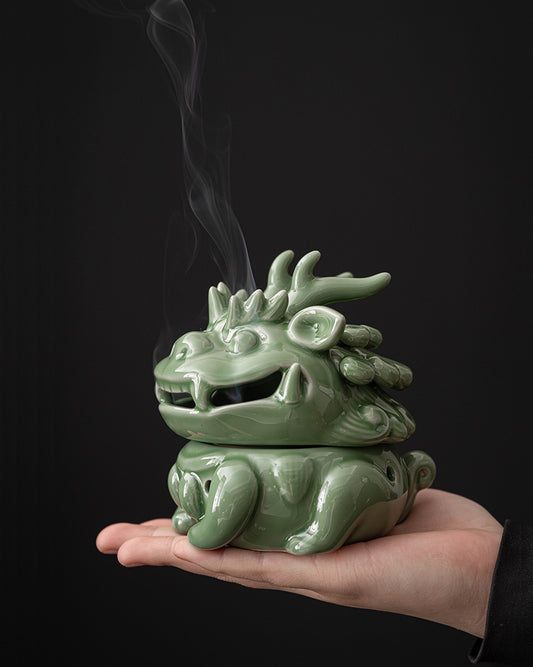
Place your censer (an antique bronze or a subtle celadon piece) on a stable, uncluttered surface. Beside it, arrange your metal tools: the ash tamper (Pinghui), the incense spoon (Xiangshao), the incense shovel (Xiangchan), and the seal mold (Xiangzhuan). Open your jar of aged incense powder. Notice the subtle, unlit aroma—a whisper of the forest floor.
Pressing the Ash: The Cultivation of Patience
The foundation of the seal ritual is the ash bed. Using the metal tamper, begin to press the white ash within the censer. The goal is to create a perfectly flat, mildly compacted surface. This step cannot be rushed. As you smooth the ash, imagine you are smoothing the ripples of your own consciousness. Any impatience will reflect in an uneven surface, which will later cause the incense to burn irregularly. In this act, the Earth element is prepared to receive the Wood.
Laying the Seal: The Architecture of Scent
Gently place the metal seal mold upon the flattened ash. Using the incense spoon, carefully scoop the fragrant wood powder into the grooves of the mold. Use the edge of the shovel to lightly pack the powder, ensuring every intricate corner of the lotus or cloud pattern is filled. Once filled, tap the side of the mold gently with your tools to loosen the powder. With a perfectly steady hand, lift the mold straight up. What remains on the white ash is a flawless, continuous geometric pattern of pure incense—a testament to your focus.
Igniting the Fire: The Moment of Awakening
Using a natural taper or an incense match, gently ignite one precise end of the powder trail. Blow out the flame immediately. You do not want a fire; you want a deeply rooted ember. As the fire slowly travels along the path you have laid, the ritual begins. The Wood yields to the Fire, returning to Earth as ash, while the essence ascends as Water-like smoke.

The Literary Imagery of Scent: Beyond the Physical
As the smoke rises, observe its ephemeral nature. In classical Chinese literature, incense smoke is often a metaphor for the passage of time and the illusion of permanence. The Song Dynasty poet Su Shi wrote profoundly of sitting in quiet contemplation, watching the incense burn, realizing that both joy and sorrow dissipate like the fragrant mist.
Allow your gaze to soften. The smoke creates an aesthetic of Liubai—the intentional blank space found in Eastern art. It does not overpower the room; rather, it subtly alters the atmosphere, inviting the mind to expand into the emptiness. The scent should not be inhaled aggressively. Instead, let it come to you. A true, high-grade agarwood or sandalwood will exhibit an aromatic journey: perhaps a top note of cool melon or camphor, yielding to a heart of warm honey or ancient library dust, and settling into a deeply resinous, grounding finish.
A Spiritual Anchor in the Modern World
Understanding how to do an incense ritual at home provides a profound anchor in an increasingly fragmented world. It is a practice that asks for nothing but your presence. By engaging with the Five Elements, utilizing beautifully crafted tools, and appreciating the slow consumption of rare, collectible woods, we reclaim our time. We remember that we are part of a much older, slower, and infinitely more elegant rhythm.
The censer on your desk becomes a vessel of wisdom. The ritual is not a chore, nor is it a mere lifestyle trend. It is a quiet rebellion against the superficial, an enduring return to the self, and a sublime celebration of Eastern philosophical elegance. When the final ember fades, and the ash cools, the fragrance remains in the room, just as the stillness remains in your spirit.