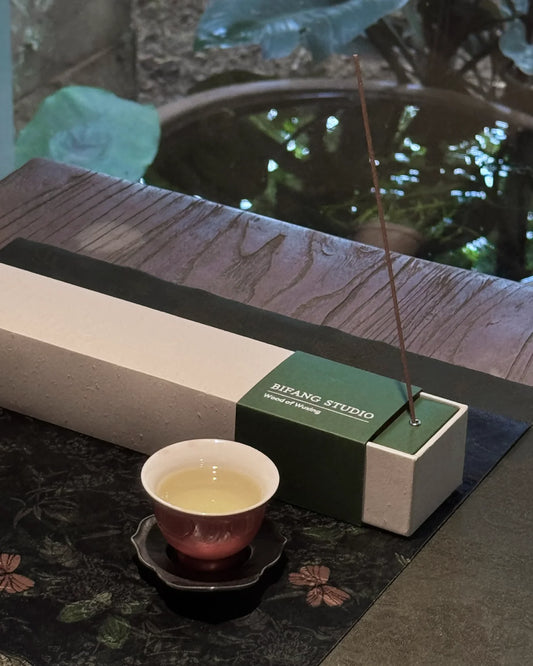
#SpatialWellness: An Oriental Guide to Feng Shui incense
The Architecture of Qi: Elevating Spatial Wellness Through the Invisible Art of Scent

We spend our lives meticulously curating the visible. We obsess over the tactile grain of a reclaimed wood table, the exact shade of limewash on the walls, and the interplay of natural light across a linen sofa. Yet, true luxury is not merely seen; it is deeply, undeniably felt. In the rapidly evolving movement of #SpatialWellness, modern design is awakening to a profound truth that Eastern philosophers have known for millennia: our environments possess a pulse. The ancient Chinese called this unseen life force Qi. To truly master a room, one must not just furnish it, but tune its frequency. At the heart of this energetic orchestration lies a deeply misunderstood practice—the refined, intentional use of feng shui incense.
Beyond Superstition: Reclaiming the Essence of Wind and Water
For decades, the Western interpretation of Feng Shui has been clouded by commercial caricatures. It has been reduced to rigid rules of furniture placement, golden toad statues, and superstitious trinkets meant to manifest sudden wealth. But when we strip away these modern commodifications, Feng Shui translates simply and poetically to "Wind and Water." It is the profound, quiet study of harmony between human beings and the natural world they inhabit.
When we introduce a premium feng shui incense into this minimalist philosophy, we are not casting a spell or engaging in cheap superstition. Instead, we are utilizing an ancient, olfactory mechanism to cleanse stagnant air, anchor the wandering mind, and elevate the sanctuary of the home. It is spatial wellness in its purest, most elemental form. Scent becomes the invisible architecture of your home, capable of shifting the mood, boundaries, and energetic resonance of a room in a matter of moments.
The Song Dynasty Aesthetic: Scent as a Spiritual Discipline
To truly understand the gravitas of this practice, we must trace its lineage back to the Song Dynasty (960–1279 AD). Widely regarded as the pinnacle of Oriental aesthetics, the Song era was defined by breathtaking minimalism, quiet contemplation, and an absolute reverence for nature. The literati and scholars of the time did not equate luxury with ostentatious displays of wealth. For them, luxury was found in restraint, proportion, and the mastery of the subtle senses.
During this golden age, burning incense was not a mundane background habit used to mask odors. It was elevated to Xiang Dao, or "The Way of Incense"—one of the Four Arts of the Chinese Scholar, alongside tea preparation, calligraphy, and floral arrangement. The Song scholars understood that scent possessed a structural quality. Where stone and wood govern the physical perimeter of a courtyard, fragrance dictates the emotional and spiritual perimeter.
A carefully crafted feng shui incense was employed to actively manipulate the Yin and Yang of a space. A damp, heavy room suffering from excess Yin was invigorated by the warming, sun-drenched notes of sandalwood. Conversely, a frantic, overheated mind plagued by excess Yang was cooled and grounded by the deep, earthy resonance of aged agarwood. The smoke itself, curling elegantly upward in the still air, was viewed as a physical bridge between the earthly realm and the divine ether—a visual representation of breath, stillness, and intention.
The Alchemy of the Air: Balancing the Five Elements
Today, as the concept of #SpatialWellness trends across global design spheres, it is essentially echoing this centuries-old wisdom. True spatial wellness is achieved only when the Five Elements—Wood, Fire, Earth, Metal, and Water—are brought into equilibrium. Incense, by its very nature, is a masterclass in this elemental alchemy.
Consider the lifecycle of a high-quality incense stick: it begins as Earth (harvested botanicals, barks, and natural resins), is transformed by the spark of Fire, manifests as a fragrant smoke that travels upon the Air (Wind), and ultimately leaves behind a delicate ash that returns to the Earth. It is a complete cycle of transformation.
When you light a pure, botanically derived feng shui incense, you are initiating a micro-ritual of energetic balance. The organic scent molecules bind to the stagnant, heavy air in your home—what ancient practitioners called Sha Qi (dead energy)—and gently disperse it. In its place, the incense invites Sheng Qi (vibrant, living energy). This practice is not merely about making a room smell pleasant; it is an energetic reset, clearing away the psychic residue of stressful workdays, outside chaos, and emotional fatigue.
Cultivating Quiet Luxury: A Ritual for the Modern Home
Integrating this ancient spatial wellness practice into a modern lifestyle requires intention. The first step is to leave behind the heavily perfumed, synthetic sticks that overwhelm the senses and pollute the air. Quiet luxury demands purity. Seek out natural ingredients—aloeswood, frankincense, cedar, and subtle spices—that whisper rather than shout. Once you have sourced your incense, consider how you apply it to the different zones of your home.
The Threshold: Severing the Outside World
Use scent to delineate transitions. We recommend lighting your incense in the foyer or entryway immediately upon returning home. Let the gentle plume of smoke act as a threshold, effectively severing the chaotic, fast-paced energy of the outside world. As you walk through the subtle fragrance, it signals to your nervous system that you have entered a sanctuary of peace.
The Heart of the Home: Centering the Space
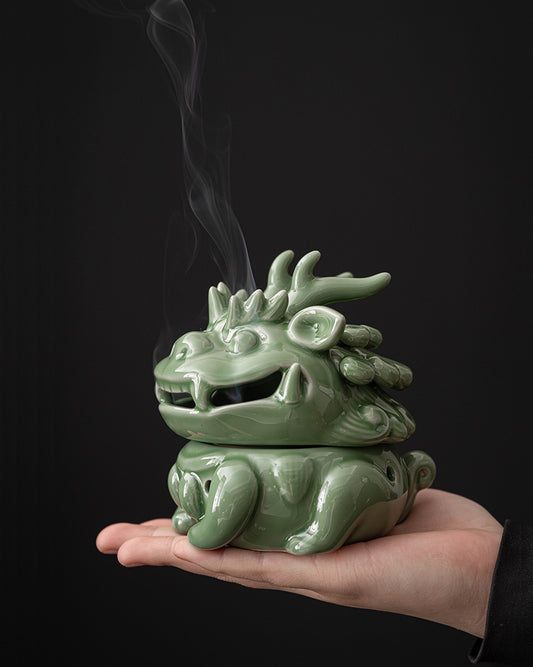
In classical Feng Shui, the absolute center of a home is known as the Tai Qi, the energetic heart from which all life flows and radiates. Placing a minimalist, beautifully crafted ceramic incense burner in this central location allows the balancing properties of the smoke to softly permeate every surrounding room. As the fragrance diffuses, visualize the architecture of your space softening, expanding, and exhaling.
The Place of Rest: Cultivating Yin Energy
The bedroom should be a temple of Yin energy—dark, quiet, cool, and restorative. Avoid overly stimulating floral or citrus scents here. Instead, burn a grounding feng shui incense rooted in deep woods or subtle resins about an hour before sleep. Allow the scent to clear the day's lingering thoughts, creating an invisible cocoon that prepares the mind for profound rest.
The Ultimate Luxury is Stillness
We live in an era defined by inescapable noise—digital, visual, and auditory. In such a world, true luxury is the deliberate cultivation of silence. It is the curation of an environment that holds you, grounds you, and restores your spirit without demanding your attention. By reclaiming the ancient, sophisticated wisdom of Xiang Dao, we elevate our homes from mere physical structures of drywall and glass into living, breathing environments.
Spatial wellness is not a fleeting interior design trend; it is a vital return to our roots. It is the quiet realization that the air we move through is just as important as the ground we stand upon. At Bifang Studio, we invite you to step away from the noise, strike the match, watch the smoke gracefully rise, and finally, take a breath. Welcome to the invisible art of living well.