De l'encens pour chaque pièce : comment créer un doux paysage olfactif chez soi
Culture Hub · Scentscaping / zonage de parfum
Toutes les pièces n'ont pas besoin d'un parfum permanent. Parfois, le meilleur plan de parfum pour la maison est une séquence de rituels calmes qui apparaissent, servent un but et s'estompent.

L'encens pour chaque pièce commence par une idée pratique : le parfum doit aider une pièce à devenir plus intentionnelle, pas seulement plus parfumée. Ce guide traduit la culture de l'encens chinois en une pratique domestique moderne pour les lecteurs occidentaux, avec des choix clairs, des rituels doux et des liens vers les produits Bifang Studio.
Commencer par le rôle de la pièce
Lorsque les gens recherchent de l'encens pour chaque pièce, ils s'attendent souvent à une formule directe : un parfum pour la chambre, un autre pour la cuisine, un autre pour le bureau. Cela peut être utile, mais ce n'est qu'un début.
Une pièce n'est pas seulement un lieu physique. Elle a un rôle dans votre vie. Le même salon peut être une pièce sociale le vendredi, un salon de lecture le dimanche et un coin de travail le lundi. L'encens fonctionne mieux lorsqu'il suit le rôle, pas seulement le plan d'étage.
La culture de l'encens chinois offre une façon flexible de penser à cela. Choisissez un parfum en fonction de la qualité dont vous avez besoin : Bois pour le début, Feu pour la luminosité, Terre pour l'ancrage, Or / Métal pour la clarté et Eau pour le repos.
Une carte douce pour les maisons modernes
| Pièce | Meilleure direction d'encens | Pourquoi ça marche |
|---|---|---|
| Bureau à domicile | Or / Métal | Propre et structuré pour la concentration, l'étude et la planification. |
| Bureau créatif | Bois | Ouvert et générateur pour le croquis, le journalisme ou l'idéation. |
| Entrée | Terre | Un parfum d'ancrage pour marquer le retour de l'extérieur vers l'intérieur. |
| Salon | Feu | Chaleureux et social lorsqu'il est utilisé brièvement avant l'arrivée des invités. |
| Rituel de chambre | Eau | Doux et spacieux pour préparer la pièce avant le sommeil. |

Pourquoi l'encens fonctionne différemment des bougies et des diffuseurs
L'encens est temporaire. C'est son avantage. Une bougie peut ressembler à un décor, et un diffuseur peut devenir un arrière-plan. L'encens demande de l'attention. Vous l'allumez, le remarquez et le laissez se terminer.
Cela rend l'encens particulièrement utile pour les pièces qui changent de fonction tout au long de la journée. Un bureau peut devenir une zone de concentration le matin et redevenir neutre à l'heure du déjeuner. Une chambre peut être préparée au calme sans être remplie de parfum toute la nuit.
Pour les maisons occidentales qui combinent des cuisines ouvertes, des salons, des bureaux et des salles à manger, un court rituel d'encens est souvent plus élégant qu'un nuage de parfum continu.

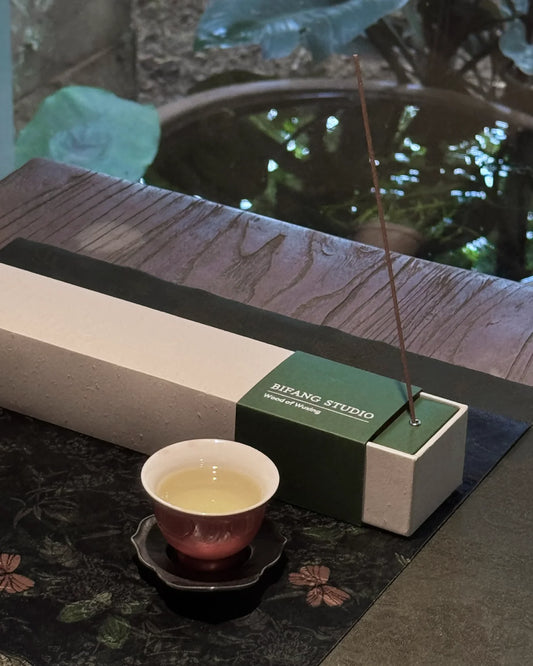
Élément Eau : Rituel d'encens de chambre avec encens chinois naturel pour un calme nocturne
Comment choisir le support pour chaque pièce
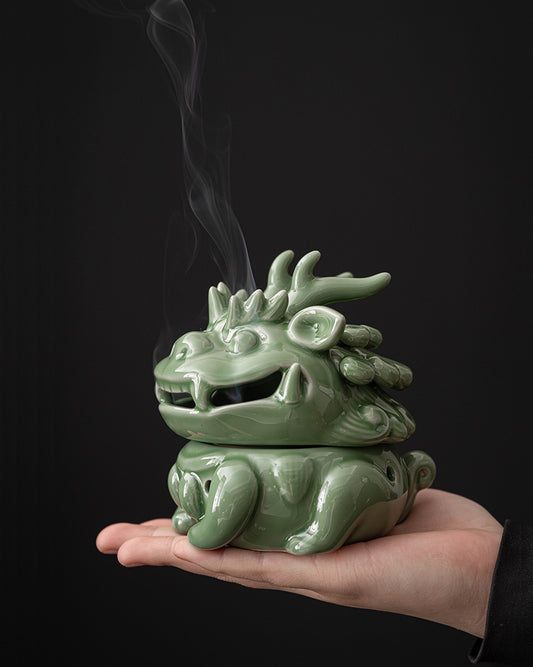
Le porte-encens fait partie de l'ambiance olfactive. Sur un bureau, un simple porte-cendres permet de garder le rituel propre et contenu. Dans une entrée, un porte-céramique sculptural peut servir de petit seuil visuel. Dans un coin de thé, un brûleur d'encens inspiré d'un vase ajoute une profondeur culturelle.
Le Brûleur d'encens trépied Fengshui de Bifang Studio convient aux rituels de bâtonnets simples, tandis que les brûleurs plus sculpturaux peuvent faire partie d'une console, d'un plateau de thé ou d'un coin de méditation. Choisissez le support en fonction de sa fonction et de son atmosphère.

Élément Feu : Ambiance moderne du salon avec encens chinois et porte-céramique
Une séquence de démarrage pour une semaine
- Jour 1 : utilisez l'Or / Métal au bureau avant un travail concentré.
- Jour 2 : utilisez la Terre à l'entrée en rentrant chez vous.
- Jour 3 : utilisez l'Eau avant une séance de lecture le soir.
- Jour 4 : utilisez le Bois avant un travail créatif ou un journal.
- Jour 5 : utilisez le Feu avant un repas social ou une musique partagée.
- Week-end : répétez seulement les deux rituels qui vous ont semblé les plus naturels.
FAQ
La chambre à coucher devrait-elle avoir de l'encens ?
Utilisez l'encens avant de dormir comme un rituel de détente, pas pendant que vous dormez. Laissez l'encens se consumer et l'air se calmer avant le coucher.
Quel est le meilleur encens pour un bureau à domicile ?
L'encens de l'élément Or / Métal est le choix le plus clair de Bifang pour la concentration et le travail de bureau. Le Bois est meilleur pour les débuts créatifs.
Puis-je utiliser le même encens dans chaque pièce ?
Oui. Si un parfum vous semble propre à votre maison, utilisez-le. Le scentscaping est une question d'intention, pas de collection de trop de parfums.