#ScentScaping: An Oriental Guide to ancient chinese incense
The Art of Scent-Scaping: Elevating Your Space with the Whispers of Antiquity

In the modern pursuit of curating the perfect sanctuary, interior design has evolved far beyond the visual and the tactile. We have arrived at the era of invisible architecture. Enter #ScentScaping—the intentional, highly customized layering of fragrance to define the mood, boundaries, and emotional resonance of a room. Yet, amidst a modern cacophony of synthetic diffusers, overpowering room sprays, and mass-produced candles, the true connoisseur seeks something more profound. True luxury does not shout; it whispers. To elevate your spatial design from merely smelling pleasant to genuinely transforming your state of mind, one must look to a tradition that mastered this art over a millennium ago: the quiet, grounding presence of ancient Chinese incense.
At Bifang Studio, we believe that the ultimate expression of elegance is found in simplicity, heritage, and mindfulness. Scent-scaping is not about masking an environment, but rather revealing its soul. By turning away from the artificial and embracing the organic, we invite a profound sense of Zen into our daily routines.
Beyond Fragrance: The Philosophy of Olfactory Minimalism
Today’s approach to home fragrance is often treated as a final, superficial accessory. But what if scent was the very foundation of your home’s energy? This is the core of minimalist, Oriental living. When we introduce ancient Chinese incense into a contemporary space, we are engaging in a practice that transcends mere aesthetics. We are sculpting the air. It is an olfactory minimalist movement where less is infinitely more.
Unlike Western perfumery, which historically sought to project identity outward, Oriental fragrance culture has always been an inward journey. It is designed to center the spirit, calm the nervous system, and create an atmosphere of profound stillness. In a hyper-connected, relentlessly loud world, this return to quietude is the ultimate luxury.
The Song Dynasty and the Way of Incense

To truly understand the depth of this practice, we must travel back to the Song Dynasty (960–1279 AD), an era universally celebrated as the pinnacle of subtle elegance and Oriental aesthetics. During this golden age, burning incense was not merely functional or religious; it was elevated to high art. It was codified as one of the "Four Arts of the Chinese Scholar," alongside the whisking of matcha tea, the arranging of seasonal flowers, and the appreciation of hanging scroll paintings.
The literati and philosophers of the time did not merely "smell" fragrance; they practiced Xiangdao, translated beautifully as "listening to incense." They believed that ancient Chinese incense possessed the unique power to purify the mind, bridge the gap between the material world and the divine, and harmonize the energy, or Qi, of a room. Rooted deeply in the ancient wisdom of the I Ching and the spatial harmony of Feng Shui, the act of lighting incense was a ritual of profound mindfulness.
The rising, ephemeral wisps of smoke served as a visual meditation. They taught the observer the beauty of impermanence, the grace of letting go, and the delicate balance of Yin and Yang. To light a stick of traditional incense was to transform a mundane room into a sacred pavilion.
The Master Artisan's Touch: Crafting Quiet Luxury
Today's commercial fragrances are often born in sterile laboratories, engineered for maximum throw and longevity. The legacy of Oriental incense, however, is deeply rooted in the earth and the passage of time. The creation of traditional incense is a labor-intensive, mindful craft that cannot be rushed.

Master artisans harvest purely natural botanicals—precious agarwood (often called the "Wood of the Gods"), aged sandalwood, star anise, clove, and frankincense. These elements are meticulously dried, ground into ultra-fine powders, and blended according to centuries-old, closely guarded recipes. Bound only by natural tree bark powder and purified water, the mixture is hand-rolled and left to cure slowly in the sun.
This slow luxury process ensures that every stick of ancient Chinese incense carries the pure, unadulterated essence of nature. When ignited, it does not release the sharp, cloying notes of artificial aldehydes. Instead, it yields a complex, earthy bouquet that settles into the room like a soft cashmere throw—subtle, warm, woody, and profoundly comforting. It is craftsmanship you can feel in the air.
How to Scent-Scape Your Modern Sanctuary
Integrating this ancient wisdom into your modern #ScentScaping routine is an exercise in intentionality. It allows you to compartmentalize your day, signaling to your brain when it is time to focus, relax, or sleep. Here is how to curate your home’s invisible ambiance using the principles of Zen lifestyle:

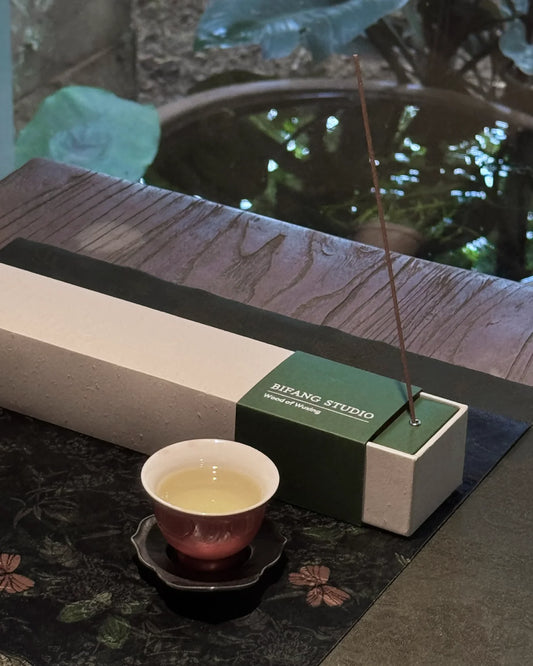
[explore our wood element incense for morning ritual]
·The Morning Awakening (The Home Office or Study):
Begin your day by burning a light, uplifting blend of sandalwood. According to Feng Shui, sandalwood clears stagnant energy. Let the crisp, slightly sweet, and woody notes clear the mental fog, inviting clarity, focus, and a sense of fresh beginnings as you step into your workflow.
·The Afternoon Transition (The Living Room or Foyer):
As the day wanes, the goal of your scent-scape should shift from productivity to presence. Introduce the grounding aroma of cypress or blended herbal aloeswood in your transitional spaces. This scent acts as a subtle boundary, washing away the friction of the outside world and transforming your living area into a space of serene receptivity.
·The Evening Retreat (The Bedroom or Bath):
For the ultimate wind-down, utilize the deeply calming, luxurious properties of pure agarwood. Its rich, balsamic, and slightly resinous scent acts as a natural sedative for the soul. Lighting agarwood an hour before sleep prepares the mind for a state of deep, restorative rest, turning your bedroom into a true sanctuary of quiet luxury.

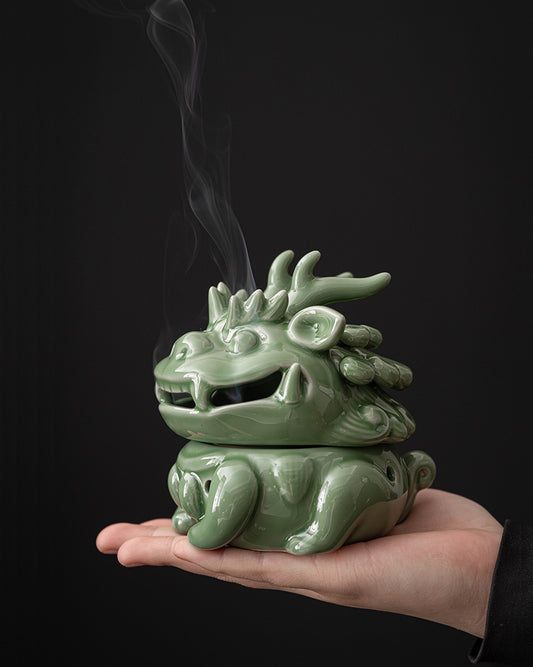
[explore our sandalwood backflow incense and dragon burner for bedroom scentscaping]
A Return to Essence
In a world that constantly demands our attention and drains our energy, cultivating a mindful home environment is the ultimate form of self-care. Scent-scaping with ancient Chinese incense is far more than a passing interior design trend; it is a profound commitment to well-being.
It is an invitation to slow down, to breathe deeply, and to reconnect with the present moment. At Bifang Studio, we invite you to elevate your daily rituals. By embracing the timeless, handmade craft of Oriental incense, you do not just decorate a room—you infuse it with poetry, history, and a quiet, enduring soul.
“Ready to curate your invisible architecture? [Explore the Bifang Studio Collection] – Hand-crafted incense for the modern connoisseur.”