The Breath of the Tang Court: Sculpting Silence with Ancient Chinese Incense

The Invisible Architecture of the #QuietLuxuryHome
In the modern lexicon of interior curation, the concept of the #QuietLuxuryHome has transcended mere visual aesthetics. True luxury is no longer defined by the loud accumulation of objects, but by the deliberate cultivation of space, light, and atmosphere. The modern aesthete meticulously curates tactile linens, sourced travertines, and the gentle geometry of minimalist furniture, yet often overlooks the most profound dimension of spatial design: the invisible. It is within this unseen realm that true elevation occurs. Enter the profound, grounding ritual of ancient chinese incense—a tradition that transforms everyday home fragrance from a fleeting afterthought into a high-end, meditative Zen art form.
Scent is the final architectural element of any sanctuary. While synthetic room sprays and mass-produced candles impose themselves upon a room with cloying, artificial weight, authentic Eastern incense behaves differently. It does not mask; it reveals. It weaves itself into the very fabric of the room, interacting with the minimalist voids and empty corners to create what classical Eastern aesthetics describe as the power of intentional emptiness. By integrating ancient chinese incense into your daily rituals, you are not merely perfuming a room; you are sculpting silence, bringing a profound olfactory resonance to your carefully curated interiors.
A Genealogy of Smoke: The Heritage of the Literati
To understand the depth of this art form, one must look back through the veils of time to the golden eras of the Tang and Song dynasties. In these periods of unparalleled cultural refinement, the appreciation of scent was not a passive experience but a dedicated scholarly pursuit. Alongside brewing rare teas, arranging minimalist florals, and hanging scroll paintings, the burning of ancient chinese incense was considered one of the essential Four Arts of the Chinese Scholar. It was the ultimate expression of internal cultivation and sophisticated restraint.
The imperial courts and the literati understood that fragrance had the power to bypass the logical mind and speak directly to the soul. They developed an elaborate culture known as Xiang Dao, or the 'Way of Incense.' This was not the heavy, smoke-filled atmosphere of religious temples, but an intimate, whisper-quiet practice designed for private studies and elegant receiving rooms. When we burn ancient chinese incense today, we are participating in an unbroken lineage of mindfulness. We are inviting the quiet elegance of the ancient scholars into our contemporary, fast-paced lives, offering ourselves a daily tether to history, philosophy, and unhurried grace.
The Alchemy of Earth and Time: Master Craftsmanship
The distinction between commercial incense and true ancient chinese incense lies in the uncompromising dedication to deliberate, handmade craftsmanship. In the realm of quiet luxury, provenance and process are paramount. True artisanal incense is an alchemy of earth, wood, and time. It begins with the ethical harvesting of the world’s most precious botanicals—primarily Aloeswood (Agarwood) and premium Sandalwood. Aloeswood, known as the 'Wood of the Gods,' is formed over decades, sometimes centuries, as a natural defense mechanism within the Aquilaria tree. Its scent profile is impossibly complex: notes of damp earth, sweet resin, bitter cocoa, and deep, resonant woods.
Unlike Western incenses or mass-market sticks that rely on a bamboo core coated in sawdust and synthetic perfumes, genuine ancient chinese incense is coreless. Master craftsmen grind these rare woods into an ultra-fine powder, binding them only with natural tree resins and purified water. The mixture is then hand-extruded into delicate sticks or pressed into classical shapes. But the craftsmanship does not end there. Just as a fine vintage wine must rest, the incense must be aged. The sticks are laid out to cure in climate-controlled environments, allowing the moisture to evaporate and the volatile oils to mature and harmonize. This painstaking, unhurried process ensures that when the incense is finally ignited in your home, the resulting smoke is pure, gentle, and virtually free of the acrid burning smell associated with lesser products.
Rituals of Stillness: Meditative Art in the Modern Sanctuary
Integrating ancient chinese incense into a minimalist interior requires a shift in perspective. It is an invitation to slow down, to engage in a deliberate ritual that demands presence. In Oriental philosophy, one does not merely 'smell' the fragrance; one 'listens' to the incense. This poetic phrasing encapsulates the level of attention and mindfulness the practice commands. It asks you to sit quietly, to observe the elegant, dancing ribbon of smoke as it ascends, curls, and dissipates into the ether, reminding us of the ephemeral nature of all things.
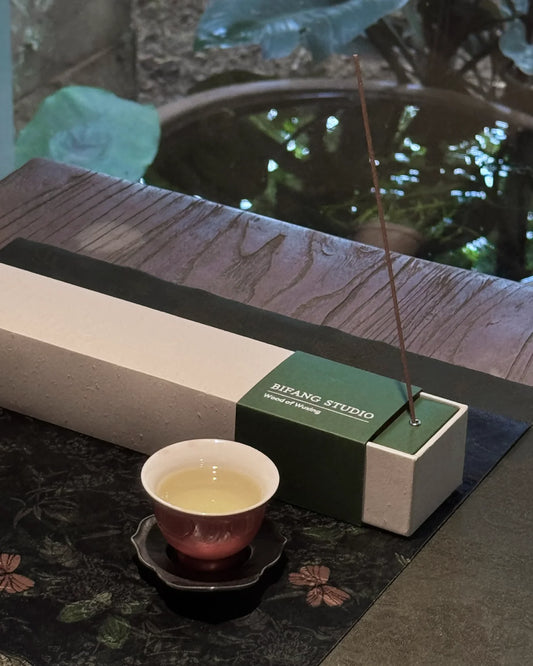
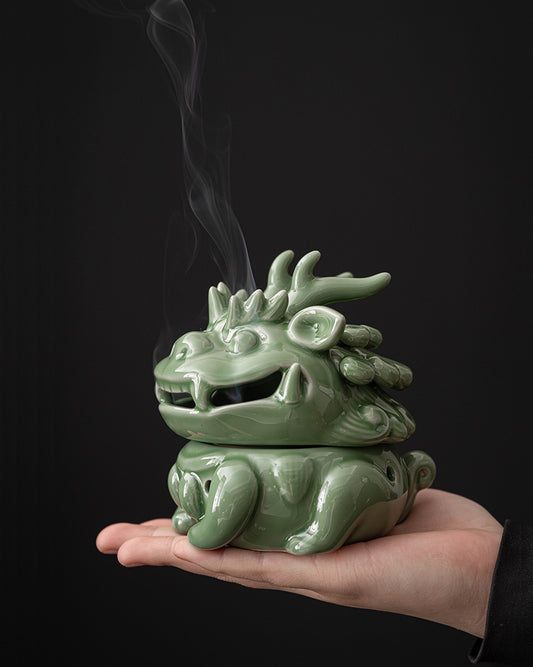
The aesthetic presentation of this ritual is equally essential to the #QuietLuxuryHome. The tools of the practice—the incense burner, the ash press, the elegant storage tubes—are themselves works of art. A minimalist bronze censer with a subtle, dark patina, or a celadon dish with perfectly crackled glaze, serves as a sculptural focal point on a coffee table or a meditation altar. The visual of a single, straight stick of ancient chinese incense resting gracefully in a meticulously crafted holder embodies the very essence of Zen minimalism. It is an intersection of form, function, and philosophy. Lighting the incense becomes a boundary-setting ritual: a declaration that the workday has ended, that the external noise is locked away, and that the space is now dedicated to restoration and quietude.
Curating the Invisible: Choosing Your Aromatic Signature
Just as you might select a specific ambient lighting for different times of the day, the curation of ancient chinese incense allows you to tailor the energetic frequency of your home. The selection of the wood dictates the atmosphere. For the crisp, early hours of the morning, when the house is bathed in cool light and the mind seeks clarity, a high-grade Sandalwood is peerless. Its bright, slightly sweet, and creamy profile cuts through mental fog, making it the perfect companion for morning meditation, journaling, or the first cup of delicate white tea.
As the day wanes and the shadows lengthen, the transition to evening calls for a deeper, more introspective aromatic signature. This is the domain of Aloeswood. Its profound, grounding, and deeply complex scent profile acts as an anchor, pulling the frantic energy of the day down into a state of serene stillness. Burning a stick of premium Aloeswood ancient chinese incense while drawing a bath, reading a book, or simply sitting in the twilight, transforms a mundane evening routine into an experience of profound, restorative luxury. It is a fragrance that wraps around you like a heavy, protective silk garment, offering shelter from the relentless pace of the modern world.
The Ultimate Luxury is Peace
In a world defined by constant connectivity, digital noise, and fleeting trends, the ultimate luxury is not something that can be worn or driven. The ultimate luxury is peace. It is the ability to command one's environment and curate a sanctuary that actively nourishes the spirit. By elevating your interior spaces with the deliberate craftsmanship of ancient chinese incense, you are doing more than simply perfuming the air. You are aligning your home with a centuries-old philosophy of Zen, restraint, and beauty.
At Bifang Studio, we believe that true elegance is a whisper, never a shout. It is found in the meticulous details, the honoring of ancient traditions, and the conscious choice to surround oneself with objects of profound meaning. Let the quiet luxury of ancient chinese incense breathe life into your minimalist interiors. Allow its ephemeral smoke to sculpt your space, quiet your mind, and transform your everyday home into a masterful, meditative work of art.