The Architecture of Stillness: Eastern Philosophy and Incense for Anxiety and Stress Relief

The Ephemeral Sanctuary: Rethinking Restlessness
In the relentless cadence of the modern era, the mind is frequently besieged by a cacophony of demands. The pursuit of tranquility has thus become a central endeavor for those seeking equilibrium. However, true serenity is rarely found through abrupt interventions; rather, it is cultivated through intentional rituals that anchor the spirit. Within the lexicon of traditional Eastern aesthetics, the burning of fine woods and resins is not a mere masking of ambient odors, but a profound medium for spiritual calibration. When seeking incense for anxiety and stress relief, one must look beyond the superficial and enter the profound realm of Xiangdao—the Chinese Way of Fragrance.
To the ancient literati, an incense stick was not a consumer good. It was an artifact of time, a physical manifestation of nature's quiet endurance. It stands as a bridge between the tangible world and the ethereal expanse of the cosmos. Engaging with premium incense is an invitation to pause, to observe the silent dissolution of matter into spirit, and to find a profound sanctuary within the ephemeral.
Xiangdao: The Way of Fragrance and Inner Equilibrium
The tradition of Xiangdao dates back millennia, evolving from archaic ceremonial offerings to a highly sophisticated art form embraced by the scholars and poets of the Tang and Song dynasties. It is a practice deeply intertwined with Zen Buddhism and classical Daoist thought. In this context, one does not merely "smell" the fragrance; the classical Chinese terminology translates to "listening to the incense" (ting xiang). To listen to a scent requires a state of profound receptivity and internal silence.
The Philosophy of Listening to Incense
When the mind is burdened with anxiety, it becomes fragmented. Listening to incense demands that all senses converge upon a single, fleeting point of focus. As the delicate plume of smoke rises, twisting and dissolving into the ether, it serves as a visual and olfactory anchor. The sophisticated aromatics of aged Agarwood (Chenxiang) or Sandalwood (Tanxiang) act upon the nervous system, drawing the scattered fragments of consciousness back into a unified, centered state. This ancient meditative practice reveals why high-tier incense for anxiety and stress relief remains unsurpassed by synthetic modern alternatives.

Wuxing: The Five Elements in the Olfactory Realm
At the very heart of Eastern philosophy lies the concept of Wuxing, or the Five Elements: Wood, Fire, Earth, Metal, and Water. These elements are not static materials, but dynamic phases of cosmic energy. A meticulously crafted incense ritual is a microcosm of the universe, harmonizing these five forces to restore balance within the human microcosm.
Wood (木): The Root of Vitality
Wood is the origin of the fragrance. It represents growth, deeply rooted wisdom, and the passage of centuries. In traditional Chinese medicine, the Wood element governs the liver, the organ associated with the processing of stress, anger, and emotional stagnation. High-grade agarwood, formed over decades of weathering and silent suffering within the forest, embodies the ultimate resilience of Wood. When burned, its esoteric, complex aroma smooths the flow of vital energy (Qi), gently dissolving the hardened knots of anxiety.
Fire (火): The Catalyst of Transformation
Fire is the transformative catalyst, though in the art of Xiangdao, it is never a raging flame. It is a disciplined, glowing ember—a contained warmth. Fire corresponds to the heart and the mind (Shen). The gentle, sustained heat releases the soul of the wood without destroying its integrity. This quiet ember teaches the anxious mind the art of controlled passion and steady illumination, replacing frantic energy with a calm, enduring light.
Earth (土): The Grounding Vessel
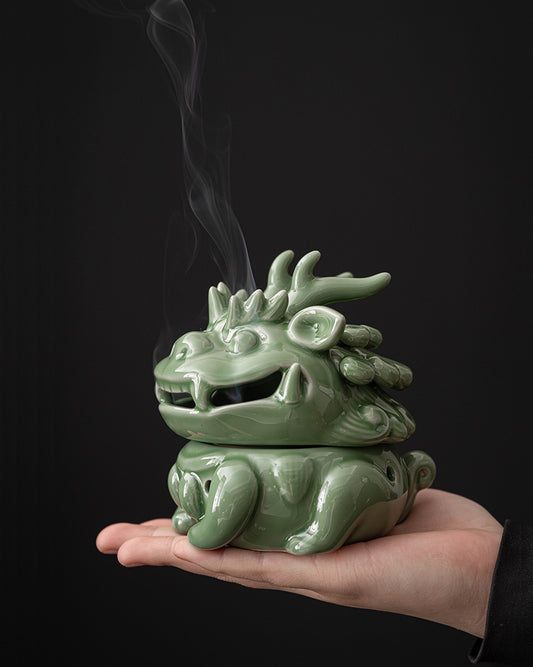
Earth manifests in the incense ash and the ceramic or clay censer that holds the offering. Earth represents the center, stability, and nourishment. As the incense burns, it returns to ash, settling softly into the bed of the censer. This gravitational return to the earth reminds the practitioner of their own grounded nature. Surrounding oneself with tactile, earthen vessels provides a subconscious anchor, pulling the consciousness away from the dizzying heights of stress and back to a solid foundation.
Gold (金): The Breath of Clarity
Metal governs the lungs and the breath. In the traditional incense ceremony, precise brass, copper, or silver tools are utilized to tend the ash and the ember. The cool, unyielding nature of metal brings structure to the ritual. Furthermore, as the fragrance permeates the air, it invites slow, deep respirations. The inhalation of the sacred scent clears the respiratory pathways, purifying the body and dispelling the melancholic fog that often accompanies chronic stress.
Water (水): The Flow of Stillness
Though an incense ritual appears devoid of liquid, the Water element is profoundly present in the movement of the smoke. It cascades, curls, and pools like a mountain stream depicted in classical Shan Shui (mountain-water) ink paintings. Water represents wisdom, fluidity, and the kidneys—the seat of foundational energy and the conqueror of fear. Watching the fluid dynamics of the smoke allows the mind to enter a state of flow, washing away the rigid, crystalline structures of anxiety.
Incense for Anxiety and Stress Relief: A Cultural Carrier
To view our incense merely as a tool for relaxation is to overlook its true provenance. It is a high-level cultural carrier, a medium through which the wisdom of the ancients is transmitted to the present day. Each formulation is a silent poem, composed of rare botanicals and resins that have witnessed the turning of generations. They are artifacts worthy of collection, offering a spiritual sanctuary that appreciates in meaning with every use.
The Literary Imagination of Scent
Consider the poetic landscape of Wang Wei, the great Tang dynasty poet who wrote of empty mountains and autumn rain. His words evoke a profound stillness, a state of Kongqi (emptiness) where the self dissolves into the natural world. Our incense is designed to replicate this literary landscape within your personal space. The scent is restrained, never aggressive. It lingers at the edge of perception, requiring the mind to quiet itself to fully comprehend its depth. It is in this silent reaching, this delicate interplay between presence and absence, that true stress relief is discovered.
Cultivating Your Personal Ritual
The integration of traditional Chinese incense into your daily life is a commitment to your own dignity and inner peace. Set aside a specific time, perhaps at the closing of the day, to engage with the elements. Prepare your censer, light the wood, and observe the convergence of Wuxing. Breathe with intention. Allow the fragrance to envelop you, not as a rapid remedy, but as a slow, elegant recalibration of the soul. In the quiet consumption of the incense, the burdens of the temporal world are rendered as weightless as the smoke itself, leaving behind nothing but a profound, unshakeable stillness.