Chinese Incense Seal Ritual: How to Practice Xiangzhuan at Home

An incense seal ritual, known as Xiangzhuan (香篆), turns loose incense powder into a slow-burning pattern of fragrance, ash, and time.
Among the many forms of Chinese incense practice, Xiangzhuan is one of the most visually contemplative. Fine aromatic powder is pressed into a continuous pattern using an incense seal mold, then lit at one end so that a small ember travels gradually through the design.
The appeal is not simply the fragrance. Preparing the ash bed, filling the mold, lifting the seal, and watching the pattern slowly disappear all ask for attention. The process transforms scent from something consumed passively into a deliberate encounter with material, space, and time.
If you are looking for a simpler practice using incense sticks, begin instead with our Chinese incense ritual guide. This article focuses specifically on the traditional incense seal ritual and how to practice Xiangzhuan at home.
What Is an Incense Seal Ritual?
Xiangzhuan literally refers to incense arranged in a seal-like or patterned form. Rather than burning a vertical incense stick, fine aromatic powder is shaped into a continuous pathway on a prepared bed of ash.
Once lit, the ember advances slowly along that pathway. What begins as a precise geometric form gradually becomes fragrance and ash. The pattern is temporary by design.
Within the wider world of Chinese incense culture, practices such as this developed alongside tea, reading, painting, poetry, collecting, and scholarly life. Incense could accompany a period of study or conversation, but it could also be appreciated as an art in itself: through materials, tools, fragrance, gesture, and the passage of time.
Fragrance at the Center of Xiangzhuan
The quality of an incense seal begins with the aromatic material itself. Finely milled woods and traditional incense powders behave differently as they burn, revealing fragrance gradually rather than all at once.
Agarwood, known in Chinese as Chenxiang, may offer resinous, woody, cooling, sweet, or quietly mineral impressions depending on its origin and composition. Sandalwood tends toward a softer, warmer, creamier profile.
More complex Chinese incense formulas may combine several aromatic materials, creating a fragrance that develops over the course of the seal rather than presenting a single note.
For those beginning to explore these materials, our Traditional Chinese Incense Collection offers a broader introduction to classical Chinese fragrance traditions.
What You Need for an Incense Seal Ritual
Xiangzhuan requires more preparation than an incense stick, but the basic set of tools is relatively simple.
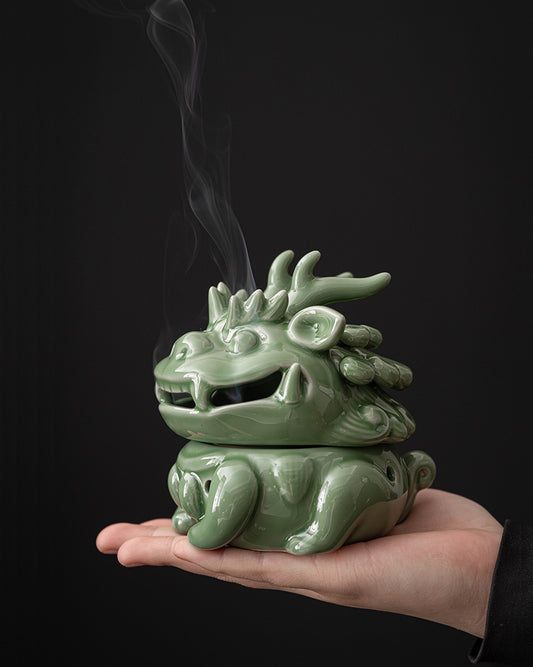
Incense Burner
A stable, heat-resistant censer holds the ash bed and provides the physical setting for the seal.
White Ash
Fine ash creates an even surface beneath the incense powder and helps support a slow, continuous burn.
Incense Seal Mold
The Xiangzhuan mold creates the continuous pattern through which the ember will travel.
Incense Powder
Use finely milled aromatic powder suitable for seal burning, rather than cutting ordinary incense sticks into fragments.
Ash Tamper
A flat tool helps level and gently compact the ash before the mold is placed.
Spoon & Small Shovel
These allow the incense powder to be distributed and lightly pressed into the narrow channels of the mold.

How to Make an Incense Seal: Xiangzhuan Step by Step
The most important part of an incense seal ritual is not speed. A clean, continuous pattern depends on a level ash bed, evenly distributed powder, and a careful lift of the mold.
Prepare the Space
Choose a stable surface away from drafts. Gentle airflow is useful once the incense is burning, but strong air movement can disturb the powder before the seal is complete.
Prepare the Ash Bed
Fill the censer with fine white ash. Using the tamper, smooth the surface until it is level and lightly compacted. Avoid pressing so hard that the ash becomes dense.
Place the Xiangzhuan Mold
Set the incense seal mold gently on the prepared ash. It should sit flat so that incense powder does not escape beneath the pattern.
Fill the Pattern with Incense Powder
Use a small spoon to place incense powder into the channels of the mold. Distribute it evenly, then lightly press the surface so the pattern remains continuous from beginning to end.
Lift the Seal
Loosen the mold gently if needed, then lift it vertically rather than sliding it sideways. A clean lift should leave a continuous incense pattern resting on the pale ash.
Light the Incense Seal
Ignite one end of the powder trail until a small ember forms, then remove the open flame. The ember should travel gradually through the pattern rather than burn with a visible flame.
How to Light an Incense Seal
Lighting Xiangzhuan differs slightly from lighting an ordinary incense stick. The goal is to establish a small, stable ember at one end of the powder path.
Touch a taper, incense match, or suitable flame briefly to the starting point. Once the powder catches, remove the flame and check that a glowing ember remains.
If the seal repeatedly goes out, the cause is often physical rather than aromatic: the powder may be too loosely packed, the trail may contain a break, or the ash beneath it may be uneven.

Reading the Incense Seal Through Wuxing
Xiangzhuan can also be contemplated through the Chinese Five Elements, or Wuxing. Rather than treating this as a fixed historical rule for incense seal practice, Bifang Studio uses Wuxing as a cultural lens through which the materials and transformations of the ritual can be observed.
The aromatic material itself begins with wood, bark, resin, herbs, and other botanical ingredients. Wood evokes growth, origin, and living material.
A small ember transforms the incense. Fire appears not as spectacle, but as a restrained force moving slowly through the seal.
The censer and bed of ash provide foundation and stability, holding the fragile powder pattern in place.
The mold, spoon, tamper, and other tools bring precision and structure to the preparation of the seal.
Smoke moves without a fixed shape. Its rising, turning, and disappearance can be read through Water’s associations with movement and fluidity.
For a broader exploration of this philosophy through fragrance, visit Bifang Studio’s Five Elements Incense Collection.
The Aesthetics of Xiangzhuan: Pattern, Smoke & Empty Space
Before it is lit, an incense seal is unusually precise. The powder sits against white ash in a continuous cloud, lotus, geometric, or calligraphic pattern.
After ignition, that precision begins to disappear.
The ember moves. Smoke rises. The darkened powder becomes ash. What was once a complete form gradually becomes absence.
This temporary quality gives Xiangzhuan much of its visual power. It resonates naturally with the appreciation of empty space found across Chinese painting and calligraphy: what is absent may be as important as what remains.
The fragrance follows a similar rhythm. It is not necessary to lean directly over the censer or continuously analyze the scent. Allow it to move through the surrounding air. Agarwood, sandalwood, or a traditional blend may reveal different impressions as the ember progresses through the seal.
Practicing the Incense Seal Ritual at Home
Xiangzhuan does not need to become an elaborate performance. At home, its value often comes from repetition: preparing the same table, using familiar tools, choosing one aromatic material, and allowing the sequence to become recognizable.
It may accompany tea, reading, writing, or an otherwise quiet part of the day. But it can also stand alone. Preparing the ash and forming the seal are already activities worthy of attention.
For beginners, the first seals may be imperfect. Powder may remain inside the mold, a corner may break, or the ember may stop before reaching the end. These imperfections are part of learning the material.
Over time, less effort is required to make the pattern precise. The hands become more familiar with the pressure of the ash, the density of the powder, and the vertical movement needed to release the mold cleanly.
In this way, an incense seal ritual becomes less about reproducing a perfect historical ceremony and more about developing a considered relationship with fragrance, tools, and time.
Incense Seal Ritual FAQ
What is Xiangzhuan?
Xiangzhuan (香篆) is a Chinese incense practice in which fine incense powder is formed into a continuous seal-like pattern on ash and then burned gradually from one end.
What is the difference between an incense seal and an incense stick?
An incense stick is already formed and can be placed directly into a holder. An incense seal uses loose aromatic powder, a prepared ash bed, and a mold, making the preparation itself an important part of the ritual.
What kind of incense powder should I use for Xiangzhuan?
Use finely milled aromatic incense powder intended for powder or seal burning. Agarwood, sandalwood, and traditional blended formulas can all be used depending on their preparation and burn characteristics.
Why does my incense seal keep going out?
A seal may stop burning if the powder trail contains a gap, is packed unevenly, or sits on an irregular ash bed. Maintaining one continuous and evenly filled path helps the ember travel through the complete design.
Is Xiangzhuan suitable for beginners?
Yes, although it requires more preparation than burning an incense stick. Beginners can start with a simple seal mold and focus first on creating an even ash bed and an unbroken powder trail.