The Art of Spatial Harmony: Decoding the Best Incense Burner Placement Feng Shui

The Ethereal Dialogue Between Scent and Space
In the quietude of a traditional Eastern study, the burning of incense is never a mere olfactory indulgence. It is a silent dialogue between humanity and the cosmos, a meticulous art form where breath meets the ethereal. To understand the true essence of this practice is to look beyond the fragrance itself and observe the vessel, the space, and the unseen currents of energy that flow within a room. For those seeking to elevate their sanctuary into a realm of poetic stillness, mastering the best incense burner placement feng shui becomes an essential pursuit. It is a profound synchronization of self, space, and the ancient philosophy of Wuxing—the Five Elements.
For centuries, Chinese literati and scholars have regarded the incense burner not as a mundane household item, but as a spiritual anchor. When a thread of smoke rises, it mimics the mist over the winding rivers of Jiangnan or the solitary clouds described in Tang dynasty poetry. The placement of this vessel dictates the flow of 'Qi', the vital life force. Correct placement harmonizes the environment, transmuting a physical room into an expansive landscape of the mind. It requires restraint, intention, and a deep reverence for the unseen.
Wuxing: The Five Elements in Fragrant Harmony
To determine the optimal placement for your incense vessel, one must first comprehend Wuxing: Wood, Fire, Earth, Gold, and Water. These are not merely physical substances, but dynamic states of transformation and energetic resonance. The ritual of incense itself inherently embodies this cyclical philosophy. The vessel, often crafted from Earth (clay) or Metal (bronze), cradles Wood (the incense material), which is awakened by Fire, subsequently releasing a fragrant plume that flows and cascades with the fluid grace of Water. By aligning this miniature cosmos with the macrocosm of your living space, you achieve true aesthetic and spiritual equilibrium.
Deciphering the Best Incense Burner Placement Feng Shui
Navigating the best incense burner placement feng shui requires an intuitive understanding of your space's directional energies. Each cardinal direction corresponds to a specific element within the Wuxing, offering a unique resonance when paired with the right vessel, fragrance, and intention.

The East: Wood and the Awakening of Spring
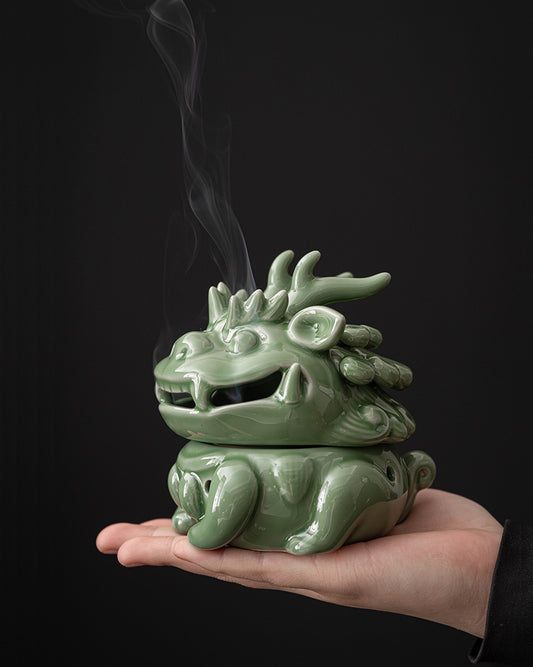
The eastern quadrant of a space belongs to Wood, symbolizing dawn, the arrival of spring, and boundless vitality. Placing an exquisite celadon or carved wooden incense burner here cultivates an atmosphere of profound renewal. When burning uplifting, crisp scents such as cypress, pine, or subtle green tea blends in the East, the energy of the room is gently awakened. This is the paramount placement for a morning ritual, inviting the rising sun to clear the stagnation of the night and sharpen the intellect for the day ahead.
The South: Fire and Illumination
Governed by Fire, the South represents summer, illumination, and the zenith of Yang energy. Because an incense burner naturally contains the element of fire, placing it in the southern sector amplifies clarity, passion, and artistic inspiration. However, the Eastern aesthetic demands balance; a restrained approach is required to prevent an overabundance of heat. Utilizing a dark ceramic or unpolished cast-iron burner anchors this vibrant energy. It is a profound location for deep, late-afternoon contemplation, allowing the mind to burn brightly yet steadily.
The Center: Earth and Grounding
The metaphysical center of any home or room belongs to Earth. It is the grounding force, the fulcrum upon which all other energies balance. Placing a masterpiece of an incense burner—perhaps an antique bronze censer possessing the rich patina of time—at the center of a living space anchors the home's Qi. Burning deeply resonant, resinous woods like aged agarwood (奇楠, Qinan) or premium sandalwood in the center disperses a protective, stabilizing, and deeply comforting warmth throughout every remote corner of the sanctuary.
The West: Gold and Autumnal Reflection
The West correlates with Gold, the season of autumn, and the quiet dignity of the setting sun. It is a direction dedicated to reflection, refinement, and the graceful art of letting go. For an evening wind-down ritual, placing a minimalist, geometrically pure metal incense burner in the western quadrant invites a serene, cooling energy. The smoke drifting here seems to mirror the quiet melancholy of ancient autumn poetry, bringing profound peace to an active mind and preparing the soul for the stillness of the night.
The North: Water and Profound Stillness
The North is the absolute domain of Water, symbolizing winter, midnight, and fathomless wisdom. Water inevitably seeks the lowest point, finding power in stillness and depth. An incense burner placed in the north should ideally feature fluid lines, organic curves, or a cascading backflow design that mimics a silent waterfall. Subtle, aquatic, or delicate floral incenses burned in this quadrant nurture deep meditation, intuitive dreaming, and a profound inner stillness that removes one from the cacophony of the modern world.

The Incense Burner as a High-Order Cultural Vessel
Beyond the mechanics of spatial arrangement, one must revere the burner itself. True luxury lies not in ostentation, but in the patina of time, the silent dedication of the artisan, and the cultural weight the object carries. An authentic Chinese incense burner is a highly collectible artifact, a silent witness to countless solitary moments of introspection. Whether it assumes the form of a lotus flower emerging untainted from the mud, or a minimalist, unadorned brass basin, the burner is a high-order cultural carrier.
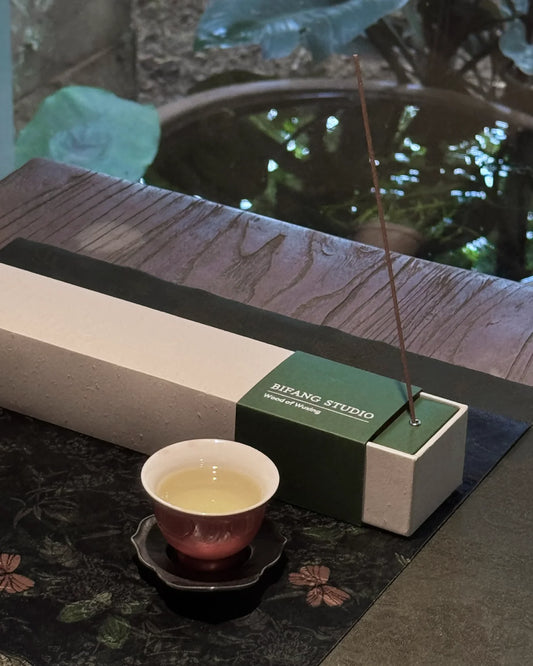
When you place it upon a scholar's desk, an entryway console, or a dedicated meditation altar, you are not merely decorating a room; you are curating a legacy. The surface upon which it rests should be chosen with equal care—a polished slab of dark stone, a piece of reclaimed timber, or a delicate silk runner. The presentation must command respect, silently communicating the sophisticated taste of the space's inhabitant.
Cultivating Your Sanctuary of Restraint
To fully integrate the best incense burner placement feng shui into a modern lifestyle is to embrace a philosophy of aesthetic restraint. Do not clutter the space surrounding your burner. Leave vast, intentional empty space—a concept known in traditional Chinese ink painting as 'Liubai'—to allow the Qi to circulate freely. Let the placement be highly intentional, functioning as an altar of minimalism in an otherwise chaotic world.
Approach the lighting of the incense with a calm, unhurried demeanor. Watch the thread of smoke rise, straight and unwavering like a solitary bamboo shoot in a quiet forest, before it gracefully dissipates into the void. This ephemeral beauty serves as a daily, silent reminder of the impermanence of the material world and the enduring, unbreakable nature of the tranquil spirit. Through the thoughtful mastery of placement, your incense burner ceases to be an object, transforming instead into a gateway to profound Eastern wisdom.