The Breath of Dao: A Guide to Incense Holder Placement and the Feng Shui of Five Elements

The Silent Dialogue of Space and Scent
In the quietude of a traditional Eastern study, the curling smoke of incense is not merely a fragrance; it is a visible manifestation of time, a transient poem written in the air. The ancient practice of incense burning, known as Xiangdao, the traditional Way of Fragrance, transcends the boundaries of olfactory pleasure. It is a profound spiritual discipline, a delicate bridge woven between the mortal realm and the boundless Dao. To those who seek classical sophistication, the vessel that cradles this ephemeral art is no mundane object. It is a sacred anchor of energy. Understanding proper incense holder placement feng shui tips is essential for cultivating a space where unseen forces flow with grace, intention, and absolute harmony.
In classical Chinese philosophy, a room is never empty. It is filled with Qi, the vital breath of the universe. The placement of a scholar’s objects dictates the rhythm of this energy. An incense holder, acting as the crucible where physical matter transforms into ethereal spirit, holds a position of paramount importance. When placed in accordance with the ancient wisdom of Feng Shui, it harmonizes the environment, quiets the restless mind, and elevates the spatial aesthetic to a realm of profound serenity.
Harmonizing the Wuxing: The Five Elements in Incense Placement
The foundation of Eastern spatial philosophy rests upon the Wuxing—the Five Elements of Wood, Fire, Earth, Metal, and Water. These are not merely physical substances, but dynamic phases of energy that continuously interact, generating and subduing one another in an eternal cosmic dance. Burning incense inherently involves these elements: the botanical nature of the fragrant wood, the transformative power of fire, and the grounding presence of the residual ash returning to earth. By aligning our incense holder placement feng shui tips with the Wuxing, we curate a living space of immaculate balance.

The East: Awakening the Energy of Wood
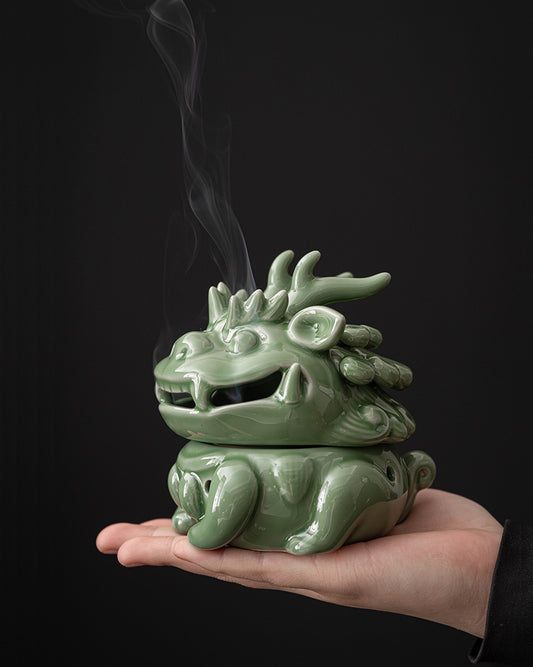
The East is the domain of the Wood element, symbolizing spring, dawn, and the relentless upward growth of life. It carries the energy of new beginnings and untethered vitality. Placing an incense holder with Wood Element Incense Sticks in the eastern sector of your room invites a serene yet invigorating Qi. For this placement, vessels crafted from rich, dark woods or celadon ceramics—reflecting the verdant hues of nature—are highly recommended. Igniting a subtle, cool-toned agarwood (沉香, Chenxiang) here at the break of day mirrors the rising sun, gently awakening the intellect and preparing the spirit for the hours ahead. This connection between the East, Wood and the morning is also explored in our guide to the best time to burn incense throughout the day.
The South: The Illumination of Fire
Governed by the Fire element, the South represents summer, peak illumination, and the blossoming of consciousness. Because the act of burning incense already introduces the Fire element, one must approach the southern placement with measured restraint. To avoid an overabundance of fiery energy, which may lead to restlessness, it is wise to utilize an incense holder made of raw earth or unglazed pottery. In the cycle of Wuxing, Fire produces Earth; thus, a ceramic vessel gracefully absorbs and grounds the intense energy. This placement is ideal for moments of deep philosophical inquiry or creative endeavor, bathed in the warm, focused aura of the fragrant smoke.
For those who want to explore the Five Elements through fragrance as well as space, Fire Element Incense Sticks offers a complementary way to bring the symbolism of Fire into an everyday ritual. When sandalwood (檀香, Tanxiang), with its deeply reassuring and warm profile, is burned here, the fragrance permeates equally in all directions.
The Center: The Stability of Earth
The center of any architectural space is its heart, resonating with the Earth element. It demands stability, neutrality, and profound grounding. Placing a substantial, meticulously cast bronze or heavy ceramic censer in the center of a room—perhaps on a low tea table—anchors the ambient Qi of the entire home. This central placement acts as an axis mundi, offering a sanctuary of absolute balance amidst the chaotic currents of modern existence. For a more grounding interpretation of the Earth element, explore our Earth Element Incense, created for meditation and a sense of stability.
The West: The Clarity of Metal
The West is aligned with the Metal element, echoing the qualities of autumn: crispness, structure, and the shedding of the unnecessary. It is a sector of refinement and introspective clarity. This makes the West especially suited to a ritual with Gold Element Incense, associated with focus, clarity, and refined energy. An incense holder forged from brass, silver, or refined alloy finds its natural home here. Metallic vessels possess a cold, austere beauty that perfectly counterbalances the warmth of the incense ember. Engaging in an evening incense ritual in the western corner helps to sever the lingering anxieties of the day, cutting through mental fog like a masterfully forged blade, leaving only pristine clarity in its wake.
The North: The Stillness of Water
The North belongs to the Water element, symbolizing winter, midnight, and the profound, hidden depths of the subconscious. In the esoteric tradition of the I Ching (Book of Changes), the harmonious meeting of Water and Fire creates the hexagram 'Ji Ji' (Already Fording), representing ultimate equilibrium. Placing a dark stone or obsidian incense holder in the northern sector facilitates this divine union. As the fiery ember glows within the domain of water, a profound stillness descends. This placement is the most conducive to deep meditation, silent reflection, and the solitary appreciation of a rare, aged agarwood. For a quieter evening or nighttime ritual, Water Element Incense offers a complementary expression of rest, reflection, and emotional ease.
Thinking beyond the incense holder?
The position of an incense holder is only one part of a Feng Shui-inspired space. If you want to explore how the Five Elements can be applied to the layout of an entire room, see our guide to Feng Shui interiors and Five Elements incense.

Essential Incense Holder Placement Feng Shui Tips
Beyond the philosophical alignment of the compass, the physical context in which your censer rests requires equally sophisticated consideration. The Eastern aesthetic demands an unwavering respect for spatial purity.

Avoid the Chaos of the Wind
In Feng Shui, Qi must be allowed to gather; wind scatters it. One must refrain from situating the incense vessel in the path of harsh, chaotic drafts, beneath air conditioning units, or directly adjacent to open, wind-swept windows. The smoke should rise in an undisturbed, silken thread—a visual metaphor for an unclouded mind. A violently flickering smoke line disrupts the tranquil atmosphere and signifies scattered, restless energy.
Elevate the Sacred
An incense holder is a vessel of reverence and should never be placed on the floor or near areas of heavy, mundane foot traffic. It belongs on an elevated surface: a dedicated scholar's desk, a carefully curated altar, or a refined tea chaban. Elevating the holder signifies respect for the fragrant woods that have taken decades, or even centuries, to mature. It elevates the act from a mere habit to a deliberate ritual.
The Poetry of Adjacency
Consider the silent dialogue between the incense holder and its immediate surroundings. In classical Chinese interiors, a censer is rarely left in stark isolation, nor is it crowded by clutter. It is often paired with intentional companions: a single stem of plum blossom in a porcelain vase, a bonsai representing a miniature landscape, or a piece of flowing calligraphy. This intentional pairing creates a microcosm of the natural world, allowing the incense smoke to drift through the branches of the bonsai or across the ink strokes, bringing the poetry of the ancients to life.
The Vessel as a Cultural Legacy
Ultimately, the mastery of incense holder placement feng shui tips is not merely about adhering to esoteric rules; it is about cultivating an intimate relationship with your environment. The censer is not a fleeting consumer good. It is a high-tier cultural carrier, a silent companion in the passage of time, and a spiritual sanctuary cast in metal, carved in wood, or fired in earth. As the fragrant ash slowly accumulates in the bowl of the holder, it records the quiet moments of your life, layered like the pages of a forgotten manuscript.
By honoring the Wuxing and embracing the restrained elegance of Eastern spatial philosophy, we invite a profound, quiet luxury into our homes. We do not merely burn incense; we curate the breath of the Dao, allowing the invisible architecture of scent to transform our daily existence into a continuous, elegant meditation.
Want to enhance your rituals, improve focus, or just shift your space’s mood?
Explore our Elemental Incense (wuxing) Collection and discover how scent can become your daily ritual for wellbeing.
Explore More about the Five Element Fengshui Incense