Whispers of Wood and Smoke: Incense and Mental Wellness Through the Wuxing

In the quietude of an ancient study, a solitary thread of smoke ascends, dividing the mundane from the sacred. This is not merely the burning of wood; it is a profound dialogue between humanity and the cosmos. In the modern era, the pursuit of tranquility has led many to explore the delicate relationship between incense and mental wellness. Yet, to understand this connection fully, one must look beyond the superficial allure of fragrance and delve into the profound depths of Eastern aesthetics and the classical Chinese philosophy of Wuxing—the Five Elements.
The art of incense, or Xiangdao, is an archaic discipline of listening. In Chinese, the term is 'Pin Xiang,' which implies tasting or evaluating, but the highest echelon of this art is 'Ting Xiang'—listening to the incense. One does not simply inhale a fragrance; one listens to its subtle whispers, allowing the complex aromatic notes to penetrate the deepest corridors of the mind, settling the restless spirit. For centuries, Chinese scholars, monks, and literati viewed incense as an indispensable spiritual vessel. It was the refined companion for calligraphy, deep meditation, the playing of the Guqin, and the brewing of fine tea. When we explore the nexus of incense and mental wellness, we are navigating a time-honored path of sensory asceticism, seeking a delicate equilibrium in an otherwise fragmented world.
The Aesthetics of the Unseen: Form and Emptiness
Traditional Chinese aesthetics are profoundly shaped by the concept of 'Liu Bai,' or leaving blank space, much like the unpainted expanses in a classical landscape scroll. This philosophy applies equally to the olfactory arts. True elegance in incense lies not in an overwhelming assault on the senses, but in a restrained, almost elusive presence. It is the 'An Xiang,' the hidden fragrance that gently pervades a room without announcing its arrival. In the context of mental wellness, this restraint is crucial. An overstimulated mind does not need more intensity; it requires the gentle, yielding space that a subtle, high-quality incense provides. This invisible architecture of scent creates a sanctuary of emptiness where the mind can finally rest, unburdened by the material demands of the physical world.

The Wuxing Metamorphosis: The Architecture of Scent
Central to Chinese cosmological thought is the Wuxing philosophy—Wood, Fire, Earth, Metal, and Water. These five phases are not static materials but dynamic processes that govern the universe and the human psyche. The ceremony of incense is a microcosm of this cosmic dance, orchestrating a perfect balance that nurtures mental wellness.
Wood (Mu): The Root of Vitality
Wood is the foundation, representing growth, vitality, and the unyielding spirit of nature. In the realm of incense, it is the raw, noble material—centuries-old agarwood (Chenxiang) or revered sandalwood (Tanxiang). These woods have weathered storms, lightning strikes, and the silent passage of time, transmuting their wounds into fragrant resins. When we interact with these ancient woods, we are absorbing their resilience. For mental wellness, the Wood element anchors our wandering thoughts, providing a grounding force that echoes the deep roots of ancient forests. It reminds the practitioner that true growth requires time, patience, and the silent accumulation of inner strength.
Fire (Huo): The Catalyst of Sublimation
Fire embodies transformation. It is the glowing ember buried within the ash, a restrained and gentle heat rather than a consuming flame. In traditional Chinese incense culture, the fire never touches the wood directly. Instead, it warms the resin from beneath, coaxing the soul out of the material. This controlled Fire represents the purification of the mind. It burns away trivial anxieties and emotional debris, offering a profound sense of release. It is the spark of clarity in the darkness of mental fatigue, transforming dense matter into pure, ethereal energy that elevates the human consciousness.
Earth (Tu): The Cradle of Stillness
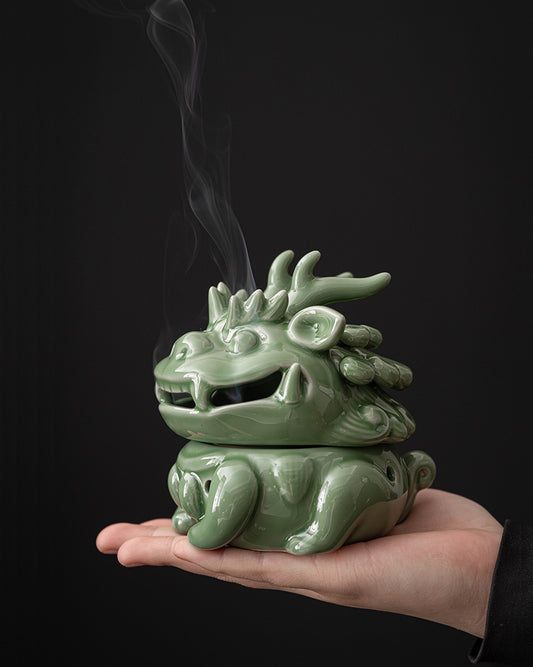
Earth is the center, signifying stability, nourishment, and holding. In our practice, Earth is manifested in the fine, meticulously pressed ash bed and the kiln-fired ceramic censer. The ash catches the remnants of the burned wood, returning the ephemeral back to the tangible. Psychologically, the Earth element in the incense ritual provides a safe harbor. The rhythmic, deliberate act of pressing the ash requires complete focus, pulling the practitioner out of a state of anxiety and into the tactile, grounding present. It is an exercise in mindfulness, where the hands quiet the mind.
Gold or Metal (Jin): The Discipline of the Mind
Metal governs structure, precision, and refinement. This element is reflected in the exquisite brass or silver implements used in the incense ceremony—the feather brush, the ash press, the delicate chopsticks. Handling these tools demands a calm disposition, steady hands, and a quiet breath. The Metal element introduces a gentle discipline to our mental wellness journey. It teaches us that true tranquility is not chaotic or formless; it is sculpted through mindful intention, precision, and deliberate grace.
Water (Shui): The Flow of Serenity
Water represents fluidity, wisdom, and the subconscious. We witness the Water element in the movement of the smoke itself. Like a slow, meandering river or a cascading waterfall in a classical ink-wash painting, the smoke drifts, pools, and dissipates into the ether. Observing this fluid motion is a deeply meditative act. It cleanses the mental palate, washing away the rigidities of daily stress and allowing the mind to adopt a water-like adaptability, flowing effortlessly around the obstacles of life.

The Literati's Solace: A Heritage of Quietude
To engage with premium incense is to converse with the ghosts of ancient poets and philosophers. In classical Chinese literature, incense is frequently invoked as a companion in solitude. Wang Wei, the quintessential poet-painter of the Tang Dynasty, wrote of sitting alone in a bamboo grove, playing the zither and whistling into the void, accompanied only by the moon and the faint scent of sinking wood. Su Shi, the great Song Dynasty polymath, frequently composed poems celebrating the virtues of incense, viewing it as a medium to transcend physical exile and find inner liberation. This imagery encapsulates the ultimate goal of incense and mental wellness: a state of profound, self-sufficient peace, where one is content to dwell in one's own company.
Beyond Consumption: A Spiritual Vessel
The experience we offer through our creations transcends the mundane boundaries of standard consumption. These meticulously curated aromatic woods, blended according to ancient recipes, and the accompanying artisanal tools are not mere commodities. They are rare cultural artifacts, spiritual anchors destined to be collected, understood, and cherished across generations. They carry the profound weight of antiquity and the meticulous craftsmanship of master artisans who understand that they are forging vessels for the human soul. To acquire such pieces is to inherit a legacy of mindfulness and an unbroken lineage of aesthetic perfection.
A Journey Inward
In our modern existence, where the noise of the world is relentless and the pace of life demands constant outward attention, mental wellness is no longer a luxury; it is an absolute necessity for survival. The Eastern path to this wellness is subtle and deeply introspective. It does not shout for attention; it waits patiently in the silence. By integrating the Wuxing philosophy into your daily ritual, the simple act of burning incense is elevated into a sacred pause—a deliberate reclamation of your own time and space.
As the fragrance gently unfurls and lingers in your private sanctuary, let it serve as a mirror reflecting your own inner vastness. The wood grounds you to the earth, the fire purifies your lingering doubts, the ash holds your burdens, the metal refines your focus, and the water washes your spirit clean. This is the ultimate elegance of the Chinese aromatic arts—a timeless, invisible sanctuary woven from wood, fire, and smoke, waiting quietly for you to step inside and return to your truest self.